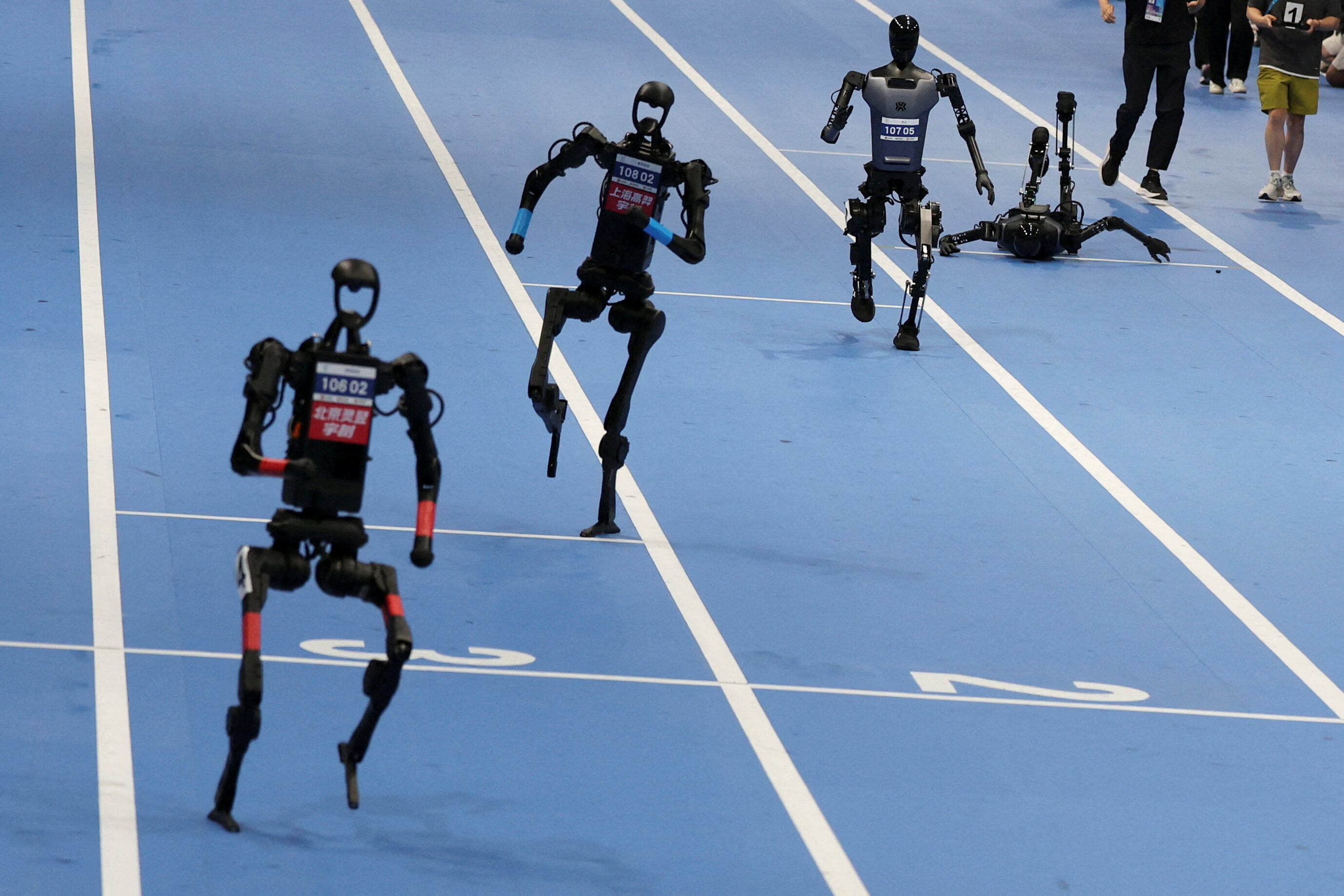
The five-day competition showcased machines performing tasks in environments modeled after factories, hotels, and homes. Unlike laboratory trials, these robots engaged in athletic drills and logistical maneuvers designed to prove their utility in agriculture, healthcare, and manufacturing. By focusing on practical, deployable hardware rather than theoretical software, China is positioning its robotics sector as a scalable alternative to costlier Western technologies.
This strategy is explicitly aimed at the Global South, offering a blueprint for industrial localization that bypasses traditional dependence on U.S. and European suppliers. By providing affordable, integrated supply chains and training local engineering talent, Beijing is building a network of technological partnerships that operate outside the influence of Western markets.
Beyond economic outreach, the games act as a strategic retort to U.S. export restrictions on advanced semiconductors. The performance of these robots suggests that domestic manufacturing has largely circumvented the impact of chip bans, transforming theoretical research into tangible productivity. By demonstrating mastery over the physical movement of autonomous systems, China is signaling its ambition to control the next generation of global artificial intelligence supply chains.




Comments (0)
No comments yet. Be the first!