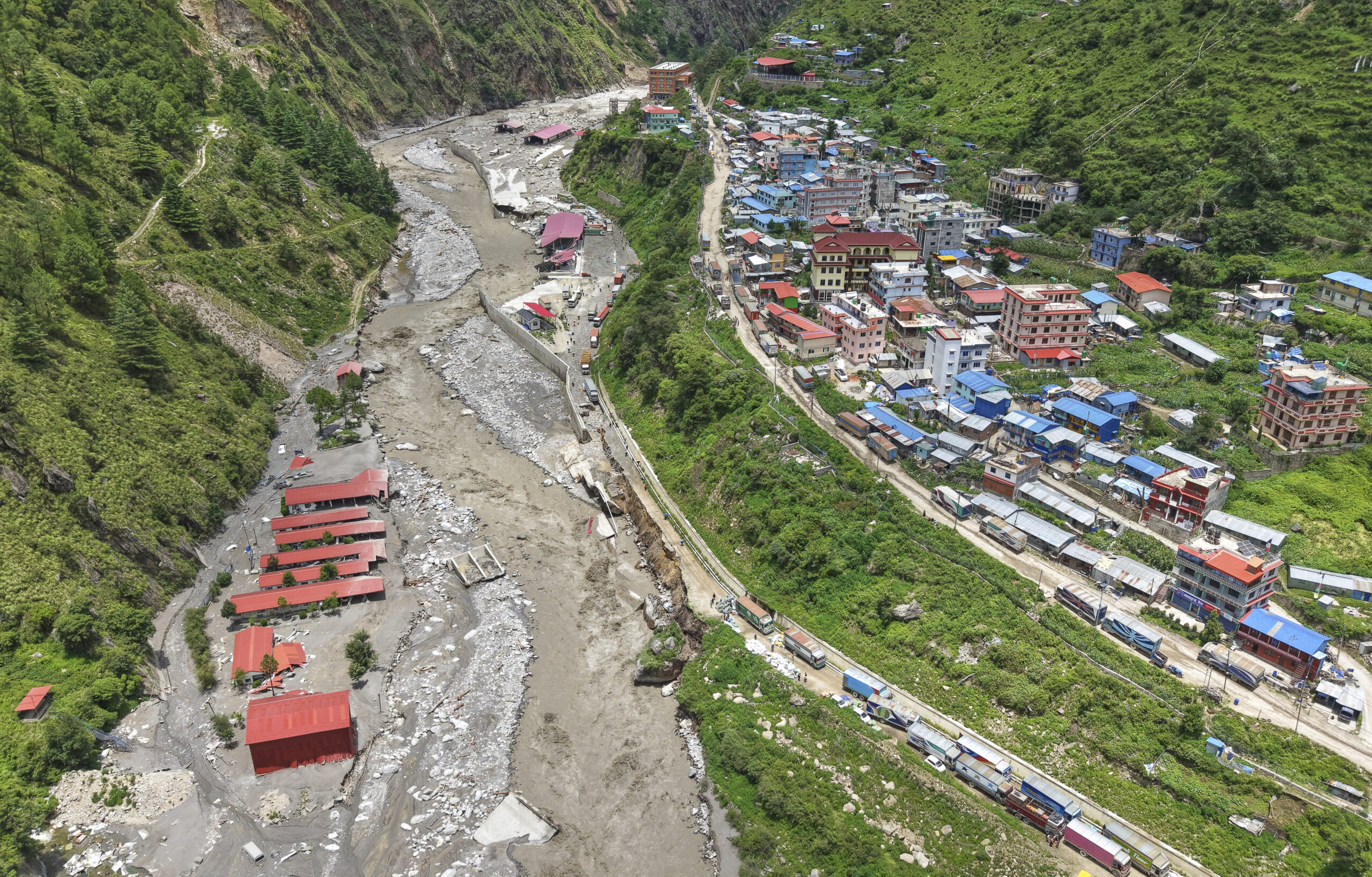
The Bhotekoshi River surged at 9 a.m., leaving a wake of destruction that spans several districts. According to district administrator Narendra Pariyar, the force of the water and debris completely erased entire villages and construction sites. In the Nuwakot district, survivors face a landscape buried in thick mud, with vehicles entombed and buildings submerged up to their second stories.
The energy ministry reports that 430 megawatts of capacity—over 12% of Nepal’s total installed hydropower—is now offline. Damage to production, transmission, and distribution facilities has forced the Electricity Authority to warn of widespread supply disruptions. This loss threatens to stall the country’s economic dependence on mountainous energy projects.
Experts at the Kathmandu-based International Centre for Integrated Mountain Development point to a glacial avalanche as the likely catalyst for the disaster. Across the border in Tibet’s Gyirong County, Chinese authorities report at least three fatalities and 265 missing persons. Scientists warn that such events are symptomatic of the broader Hindu Kush Himalayan region, where rising temperatures are accelerating glacier melt and intensifying the frequency of catastrophic weather events.



Comments (0)
No comments yet. Be the first!