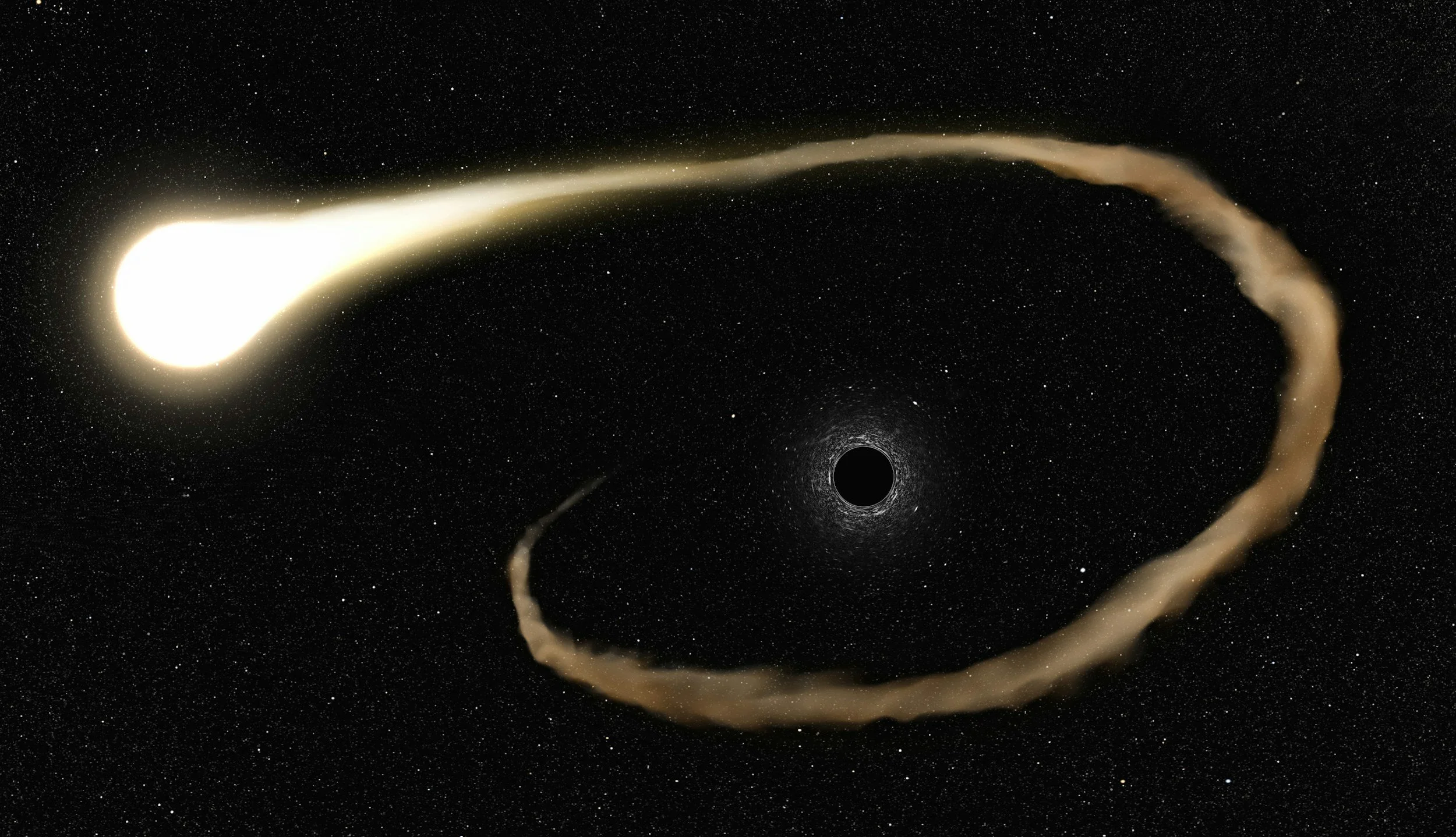
The research team identified the object during the Mirage or Miracle survey, an initiative focused on mapping the earliest galaxies. While analyzing James Webb Space Telescope data, astronomers isolated an unusually bright, red signal that defied classification as a typical star or galaxy. Spectroscopic analysis revealed a composition dominated almost exclusively by hydrogen and helium, suggesting an exotic formation process.
Unlike standard stars powered by nuclear fusion, MoM-BH*-1 appears to derive its extreme luminosity from a central black hole roughly 100,000 times the mass of the Sun. Computer simulations indicate this black hole is encased in a dense cloud of hydrogen gas, which fuels the object as material falls toward the center. Lead author Rohan Naidu suggests this mechanism could explain the abundance of mysterious red objects observed in early universe imagery. Published in Nature, these findings provide a new framework for understanding the rapid evolution of massive black holes shortly after the universe began.




Comments (0)
No comments yet. Be the first!