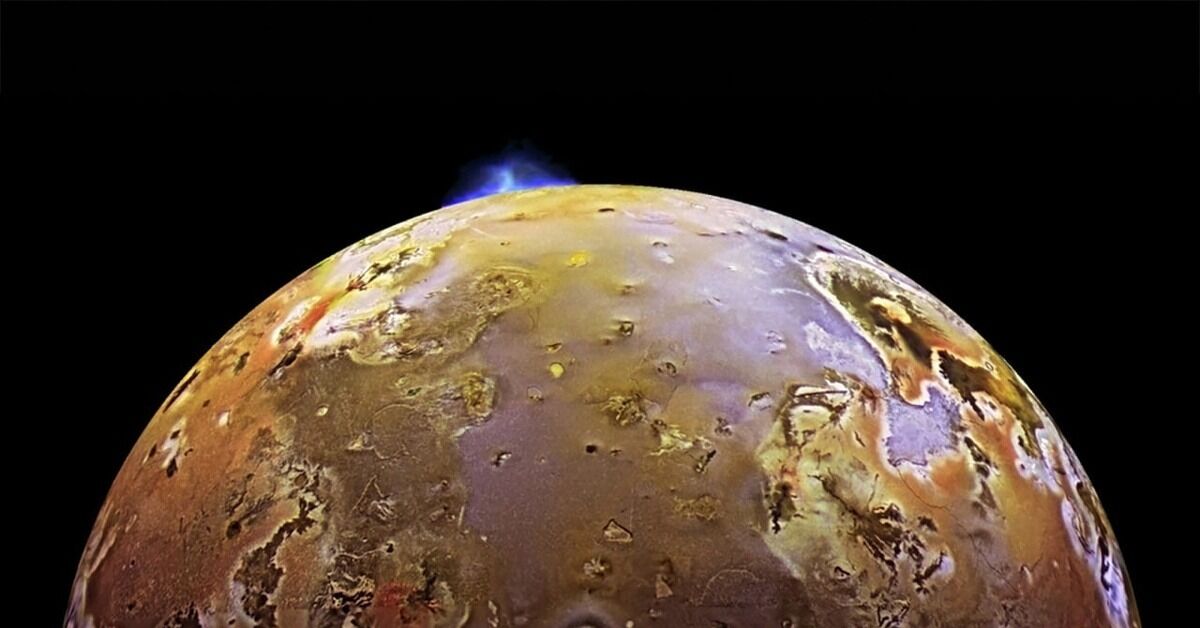
During recent flybys, Juno’s Jovian Infrared Auroral Mapper (JIRAM) captured high-resolution thermal images of the moon’s turbulent crust. The findings, published in the Journal of Geophysical Research: Planets, indicate that the moon’s surface is surprisingly smooth at long microwave wavelengths, possessing a low-density composition akin to volcanic ash or pumice. Data from the Microwave Radiometer allowed researchers to peer several meters beneath this crust, identifying a temperature increase of more than 20 degrees Celsius.
Scott Bolton, Juno’s principal investigator, noted that this ability to observe subsurface temperature gradients mirrors potential methods for studying terrestrial volcanoes on Earth. The heat is either rising steadily through the moon's crust or escaping via scattered, thin patches above hot vents covering roughly 10% of the surface. According to lead author Shannon Brown, this mission marks a shift from merely observing surface eruptions to understanding the mechanics of how heat moves from a planet's interior. This process is essential for understanding tidal heating, which sustains the subsurface oceans found on other moons like Europa and Ganymede.




Comments (0)
No comments yet. Be the first!