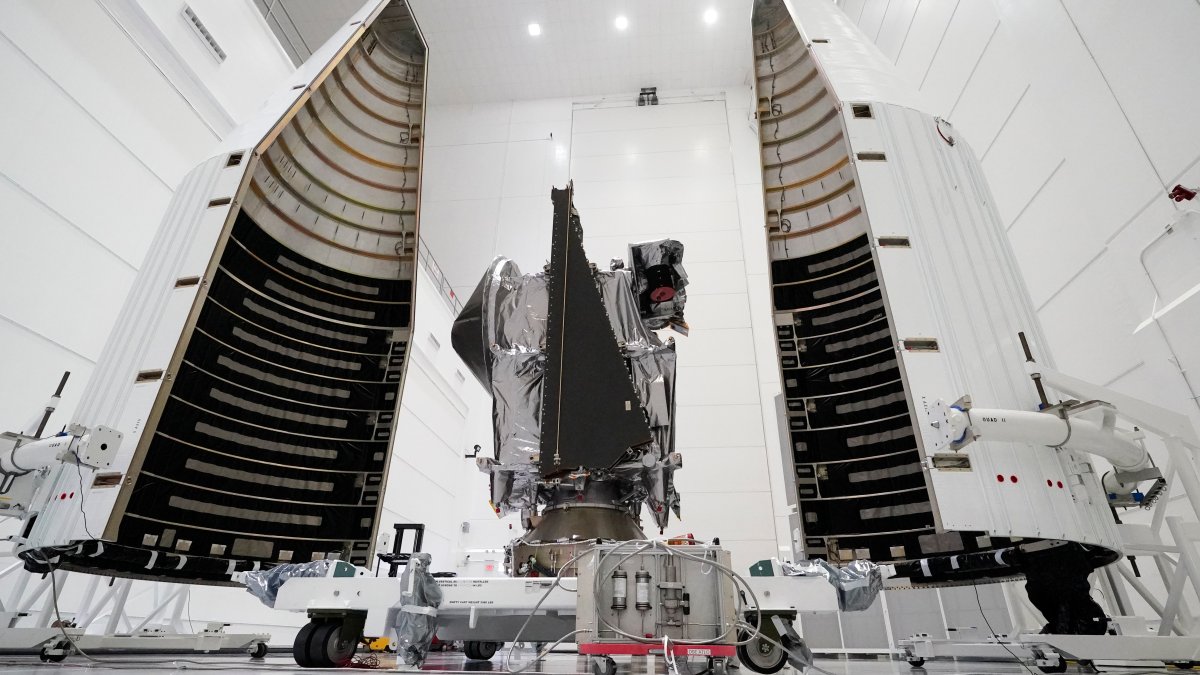
The Trojan asteroids occupy two distinct swarms known as Lagrange points 4 and 5, which are held in place by the gravitational tug-of-war between the Sun and Jupiter. These objects are spaced roughly 6 million miles apart, appearing as faint pinpricks of light to the sensors aboard Lucy. By analyzing these primordial rocks, researchers aim to reconstruct the chaotic events that shaped the planets 4.5 billion years ago.
Preparations are now underway for the first close-up observation of the asteroid Eurybates, scheduled for August 11, 2027. Following this, the mission will target Polymele, Leucus, and Orus through 2028. A final gravity assist from Earth in 2030 will propel the craft toward the L5 swarm, culminating in a 2033 study of the binary pair Patroclus and Menoetius. Despite the extreme drop in solar intensity at this distance, NASA confirms that Lucy’s instruments remain fully operational.




Comments (0)
No comments yet. Be the first!