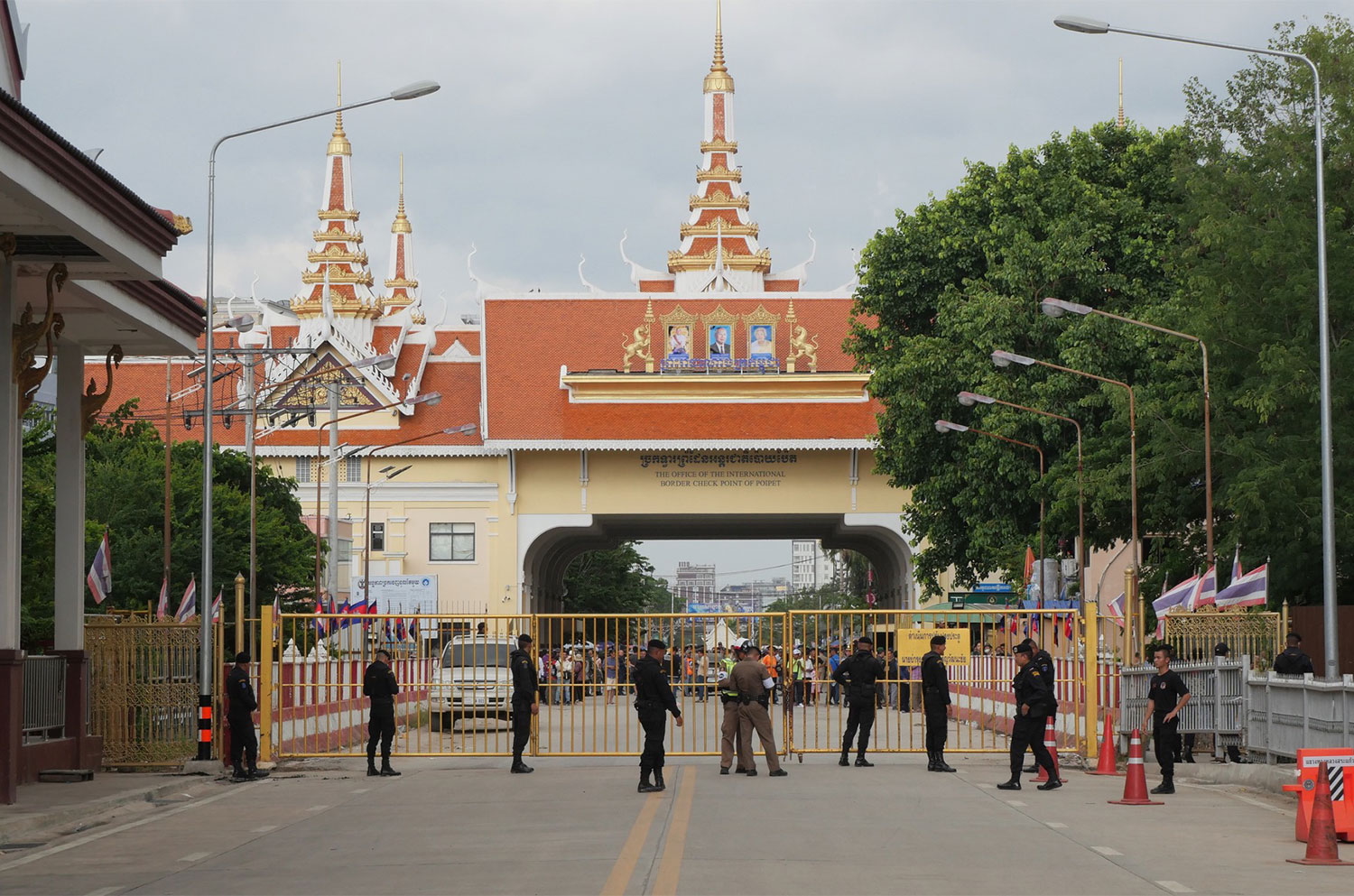
The AOT originated as a temporary fix in August 2025 to monitor a fragile ceasefire. What began as an interim mission led by Malaysia has evolved into an expanding operation, now chaired by the Philippines, with military officers from Singapore, Laos, and other member states joining the ranks. This deployment marks a departure from ASEAN's traditional avoidance of direct military involvement in internal disputes, serving as a high-stakes test of the bloc's ability to manage its own security without relying on external arbitration.
Despite this growth, the mission remains constrained by the "ASEAN Way"—a doctrine of non-intervention and strict consensus. Observers lack the authority to cross borders independently, functioning instead as witnesses to the narratives provided by host governments. Because the mission exists only by the grace of Bangkok and Phnom Penh, it documents rather than deters, often overshadowed by external pressures, such as U.S.-linked tariff negotiations that have historically spurred progress more effectively than regional diplomacy.
To evolve from a passive witness into a preventive force, ASEAN must institutionalize the AOT rather than treating it as a rotating administrative burden. Establishing a permanent coordination framework under the ASEAN Defense Ministers’ Meeting would ensure continuity, while adopting joint verification protocols would mitigate the risk of conflicting reports during flare-ups. Furthermore, providing technical assistance for border demarcation—rooted in 1907 colonial-era mapping—could address the root of the conflict. Jakarta, as a neutral founding member, is uniquely positioned to champion these reforms, proving that the bloc can transform its observer presence into a meaningful instrument of regional stability.




Comments (0)
No comments yet. Be the first!