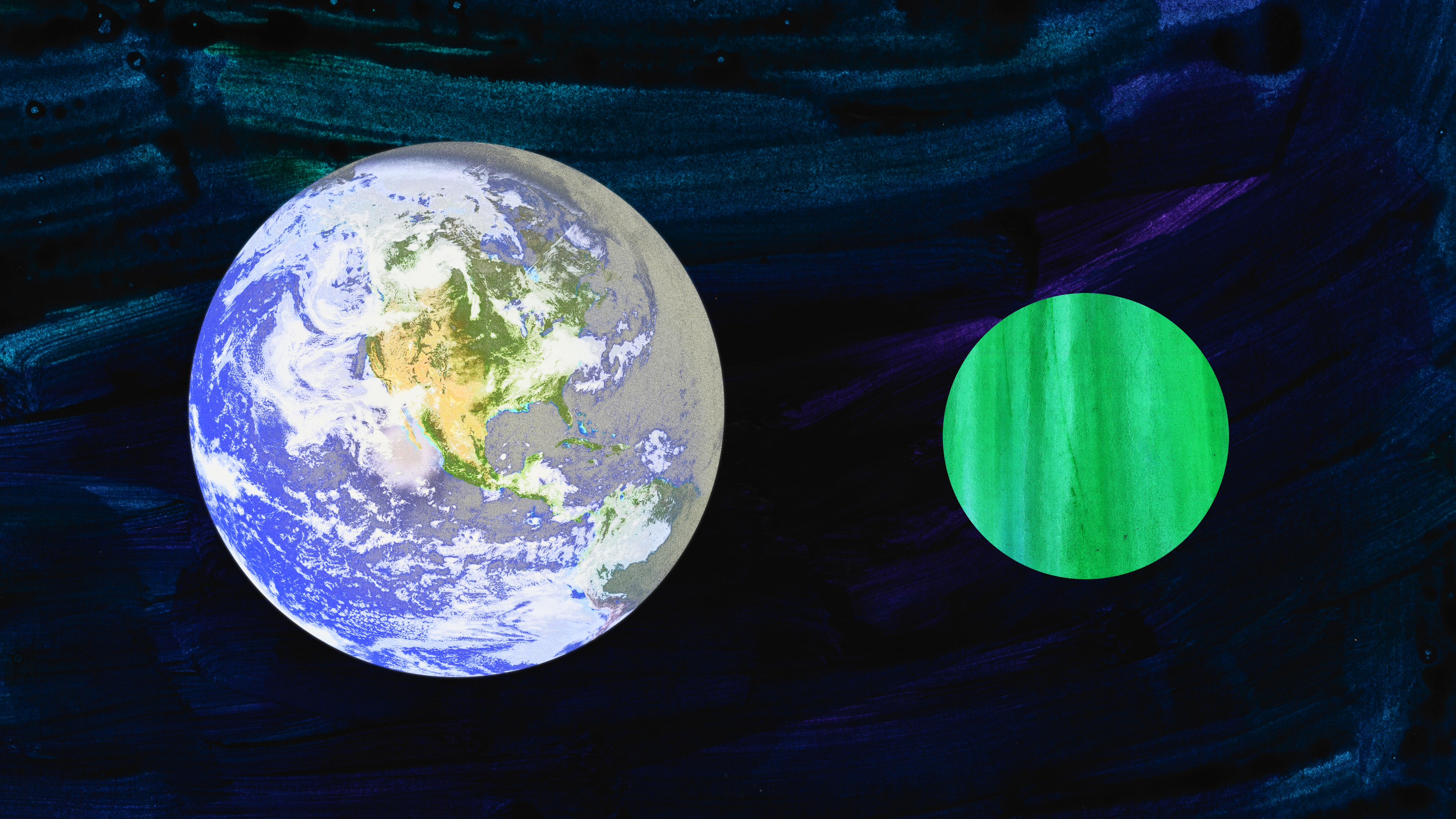
The concept centers on planets 20 to 30 percent larger than Earth with double the mass. Such characteristics would likely generate stronger magnetic fields and thicker atmospheres, shielding surface life from harmful space radiation while maintaining more stable climates. Researchers envision landscapes dominated by shallow seas and sprawling archipelagos, environments that could foster higher levels of biodiversity than those found on our planet.
Central to this hypothesis is the K-dwarf star. Unlike our Sun, these orange-hued stars burn fuel slowly, providing a consistent energy source for tens of billions of years. Astrobiologist Iva Vilovic, based at the Leibniz Institute for Astrophysics, demonstrated through laboratory experiments that plants can thrive under the light spectrum of a K-dwarf, suggesting that photosynthesis remains viable in these alien systems.
While Earth faces a gradual increase in solar heat that could render it inhospitable in roughly 500 million years, planets around K-dwarfs offer a vastly longer timeline for complex life to emerge. Astronomers René Heller and John Armstrong, who first formalized the superhabitable theory in 2014, argue that focusing solely on Earth-like replicas narrows the search for life unnecessarily. Upcoming missions, including the European Space Agency’s PLATO scheduled for 2027 and the future Habitable Worlds Observatory, aim to transition these theoretical models into empirical discovery by analyzing the atmospheres of distant rocky exoplanets.




Comments (0)
No comments yet. Be the first!