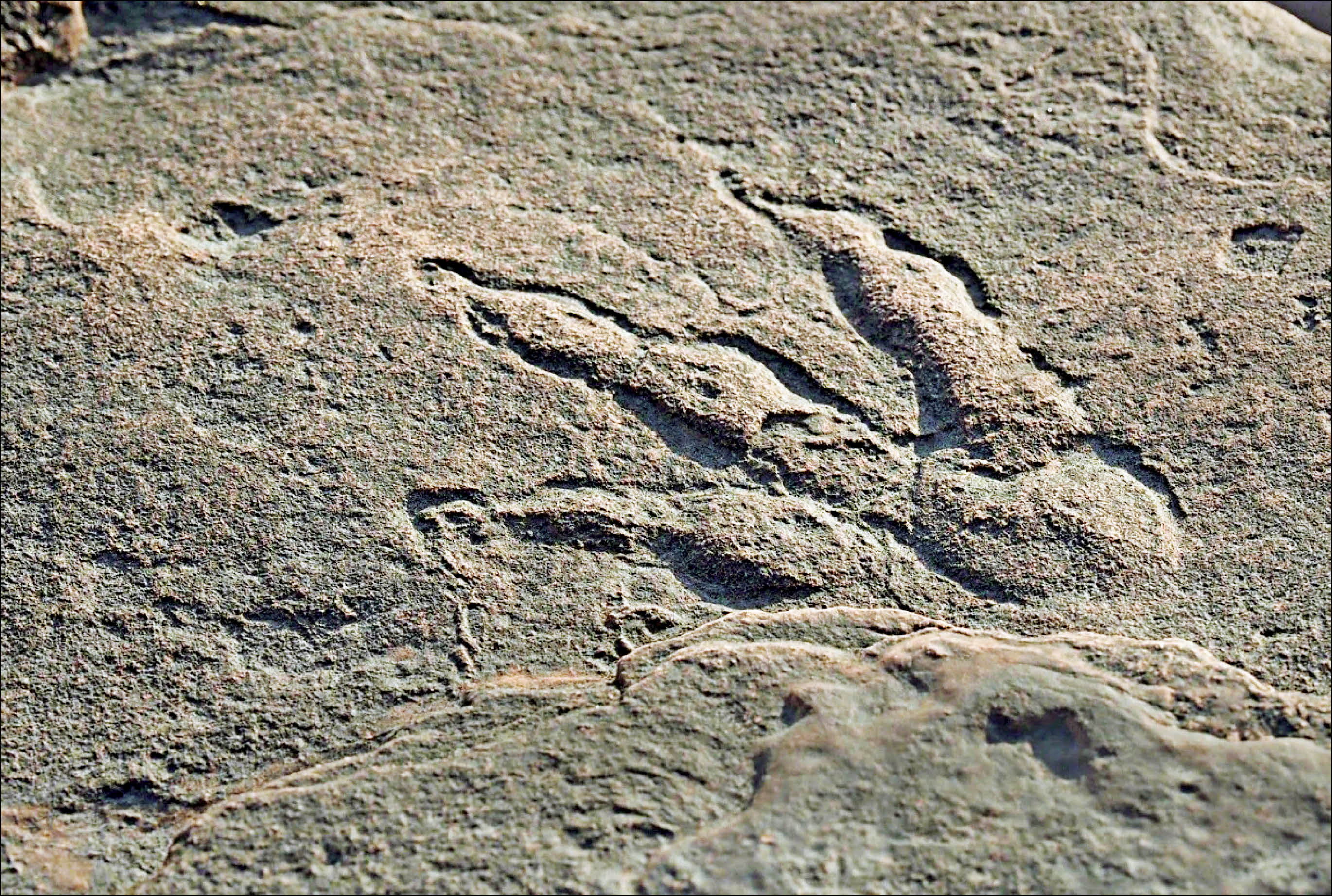
The discovery, confirmed by Tyler Lyson of the Denver Museum of Nature & Science, consists of four distinct tridactyl tracks spanning roughly 23 feet. Dating back 66.5 million years, these impressions were preserved as sandstone concretions, hardened over eons by calcium carbonate. Experts estimate the apex predator moved across the ancient landscape at a measured pace of 3.4 to 4.5 miles per hour.
While isolated footprints have been identified in Montana and New Mexico, this continuous sequence provides a rare glimpse into the animal's behavior rather than just its anatomy. Peter Falkingham, a paleobiology professor at Liverpool John Moores University, led the formal study published in the Journal of Vertebrate Palaeontology, which credits Hups as a co-author. For the Northglenn High School educator, the find serves as a practical lesson for his classroom: scientific breakthroughs often rely on the simple, persistent application of curiosity and observation.


Comments (0)
No comments yet. Be the first!