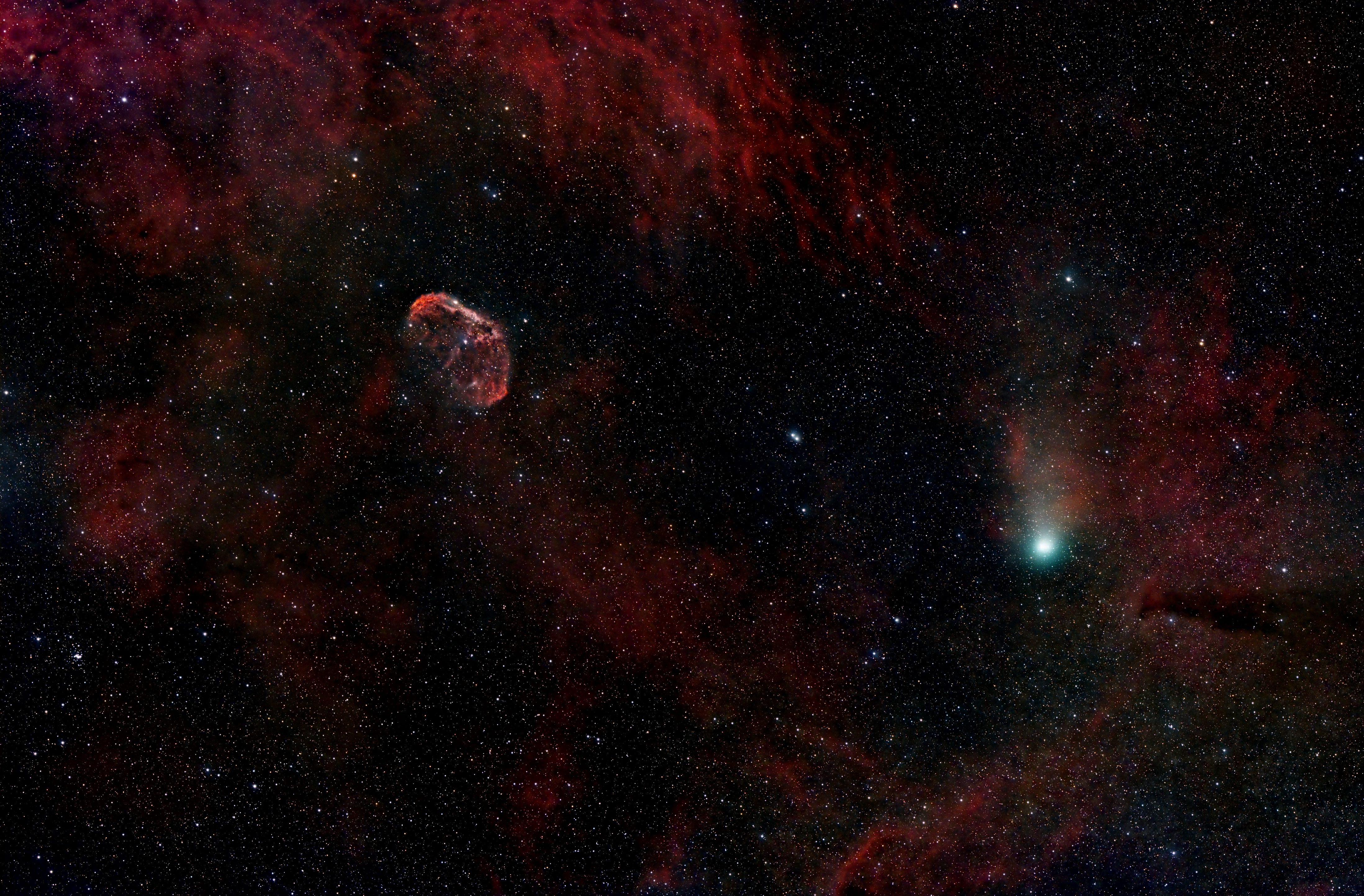
Often called the "devil comet" due to its periodic cryomagma eruptions, 12P/Pons-Brooks is a city-sized mass measuring 17 kilometers across. First identified by Jean-Louis Pons in 1812, the comet follows a highly elliptical 71-year orbit. When solar radiation cracks its icy shell, the object ejects gas and ice, creating a brilliant coma that significantly boosts its visibility from Earth. Astronomers anticipate the comet will reach peak brightness in April as it nears its perihelion on April 21.
While the prospect of seeing a comet during totality is enticing, its visibility remains subject to the object's unpredictable eruptive behavior. Observers may require binoculars or telescopes if the comet fails to brighten sufficiently for the naked eye. The April 8 event will trace a 115-mile-wide path of totality across Mexico, the United States, and Canada, offering up to 4 minutes and 27 seconds of darkness. Safety remains the primary concern for spectators, with NASA urging the use of licensed protective eyewear throughout the partial phases of the eclipse to prevent permanent retinal damage.




Comments (0)
No comments yet. Be the first!