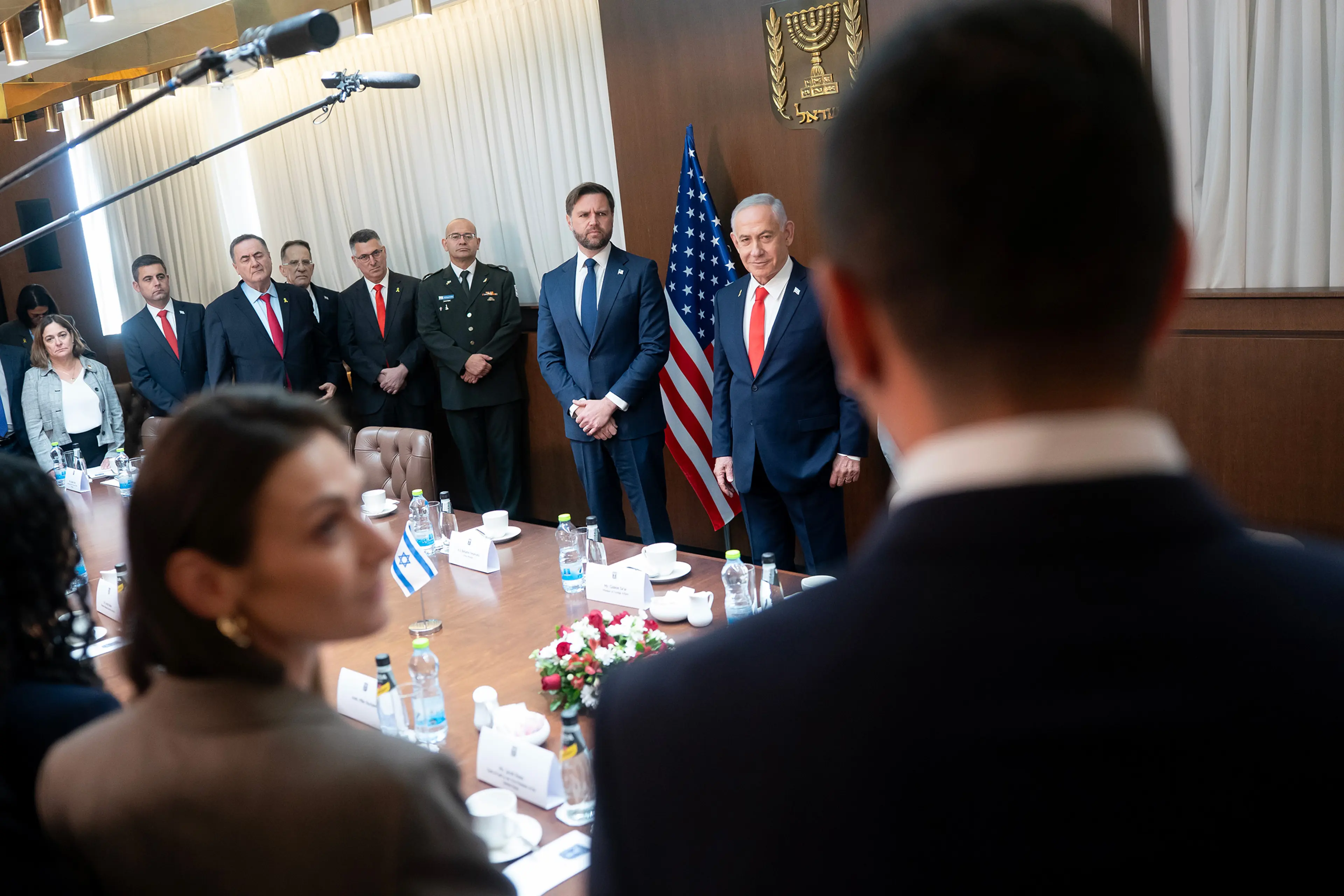
The meeting served as a pressure valve for a partnership that has frayed since the conflict began. While the Trump administration maintains a baseline of support for Israel, Vance has become the most vocal skeptic within the inner circle, openly challenging Netanyahu’s war strategy and his opposition to U.S.-led diplomatic efforts with Tehran. Netanyahu reportedly voiced frustration over Vance’s public critiques, particularly accusations that the Israeli leader questioned Donald Trump’s loyalty and sabotaged the U.S.-Iran memorandum of understanding.
Friction peaked following a tense March phone call where Vance dismantled Netanyahu’s assessment of a potential Iranian uprising. By June, the divide spilled into the public sphere, with Vance warning Israeli officials against undermining their only remaining global ally. The tension deepened further after Vance, appearing on the Joe Rogan podcast, alleged that Jeffrey Epstein held ties to high-level Israeli intelligence—a claim that drew sharp backlash for its reliance on unverified conspiracy theories. Despite the underlying resentment, officials indicated that Tuesday’s face-to-face dialogue was intended to prevent further escalation between the two leaders.


Comments (0)
No comments yet. Be the first!