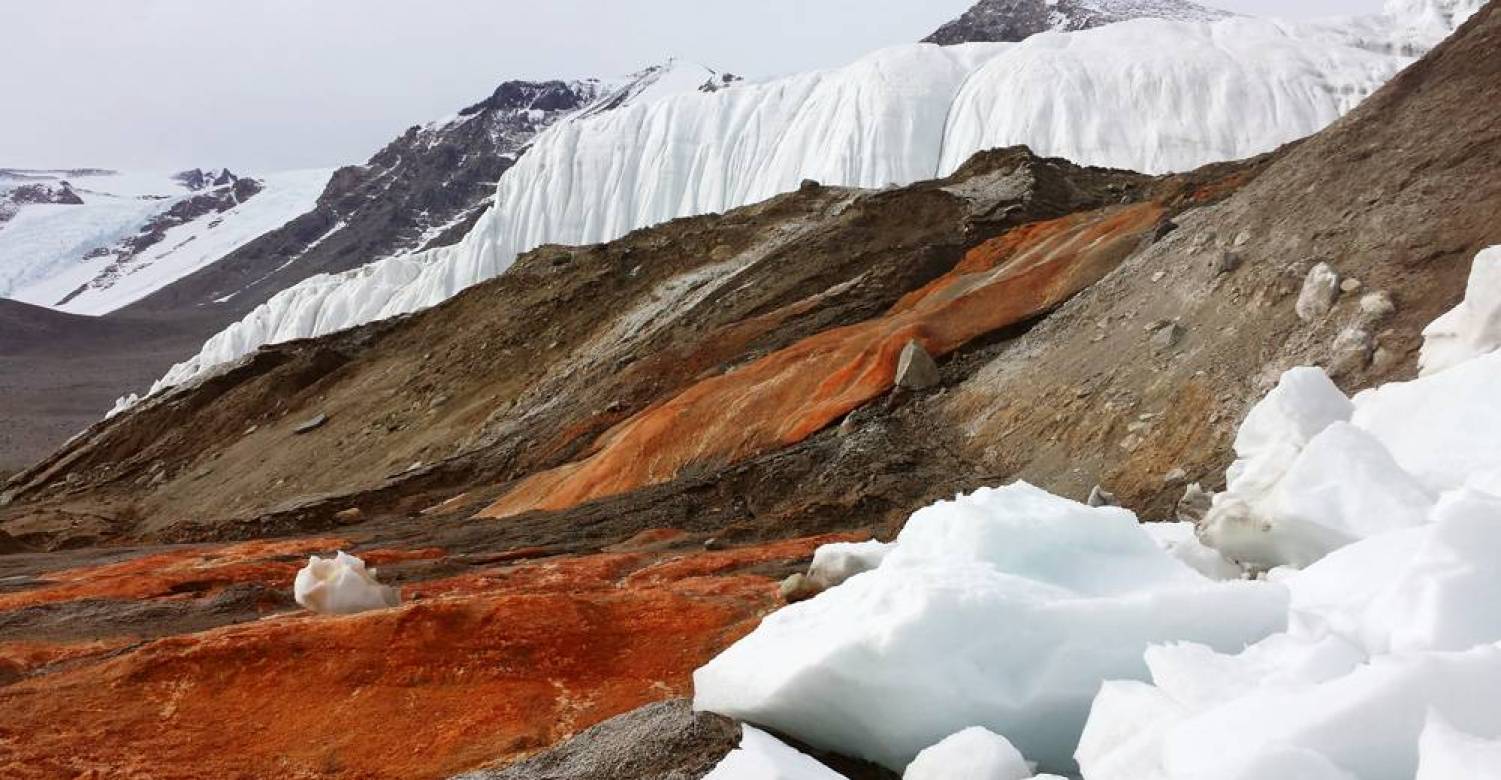
The vibrant red color stems from an iron-rich, hypersaline brine sequestered 400 meters beneath the glacier. When this subglacial fluid breaches the surface, the iron interacts with atmospheric oxygen, creating rust. The water refuses to freeze even in Antarctica’s extreme cold because its high salt concentration significantly lowers its freezing point. This brine originated from a lake trapped by the advancing Taylor Glacier approximately 1.5 million years ago.
Geologist Griffith Taylor first encountered the site, initially attributing the color to algae. That theory dissolved as later research identified the iron-rich brine as the true culprit. A major breakthrough arrived in 2017 when University of Alaska Fairbanks researchers utilized radar to map a 300-meter network of internal channels, revealing how pressurized fluids navigate the glacier’s interior. Recent findings published in Antarctic Science further clarify how structural fractures allow this brine to periodically breach the surface.
Perhaps more significant than the geology is the life thriving within this darkness. Microbes have survived in this isolated, oxygen-poor environment for over a million years, eschewing photosynthesis for chemical reactions involving sulfate. This isolated community serves as a vital analog for astrobiologists, providing a terrestrial model for how life might persist within the frozen, subterranean oceans of distant moons and planets throughout our Solar System.



Comments (0)
No comments yet. Be the first!