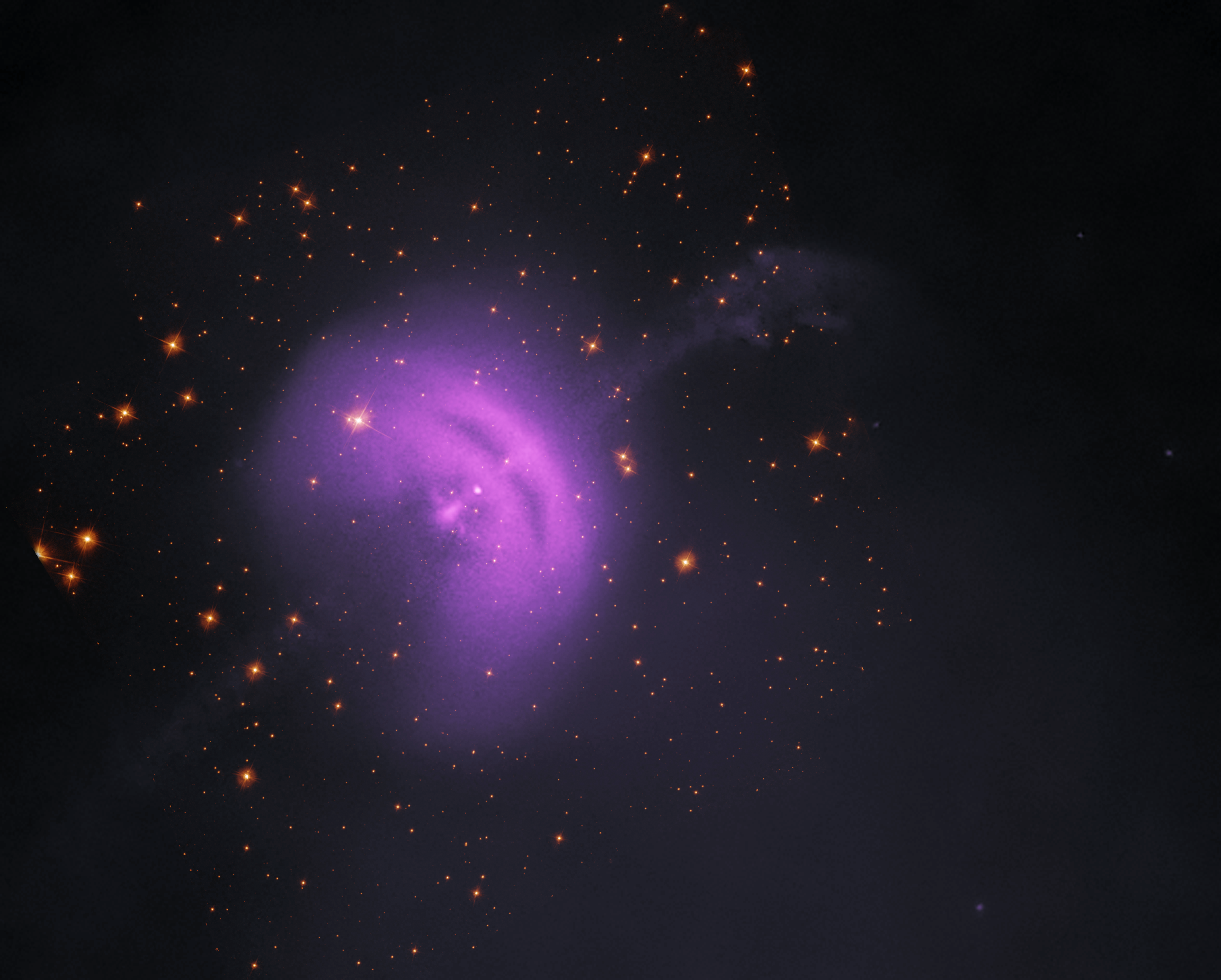
The Vela pulsar, a dense core only 15 miles in diameter, rotates 11 times per second, acting as a cosmic lighthouse. As it spins, it sheds winds of charged particles that collide with surrounding gases, forming a pulsar wind nebula. Recent imagery combines data from the Imaging X-ray Polarimetry Explorer, the Chandra X-ray Observatory, and the Hubble Space Telescope to map the chaotic magnetic fields and high-energy jets originating from this celestial engine.
A study published in Nature reveals an unexpected degree of polarization in the nebula’s X-rays. Fei Xie, the study's lead author, noted that this represents the highest polarization measured in a celestial X-ray source to date. This high level of organization indicates that the magnetic fields within the nebula are remarkably aligned, forcing electrons into the rapid spiraling motion known as synchrotron emission. Alessandro Di Marco, a researcher involved in the analysis, stated that these findings bridge a critical gap in understanding how energy is transferred from a rotating pulsar into the surrounding environment. By mapping these structures 1,000 light-years away, scientists are now using the Vela nebula as a high-energy laboratory to observe particle acceleration processes that remain impossible to replicate on Earth.



Comments (0)
No comments yet. Be the first!