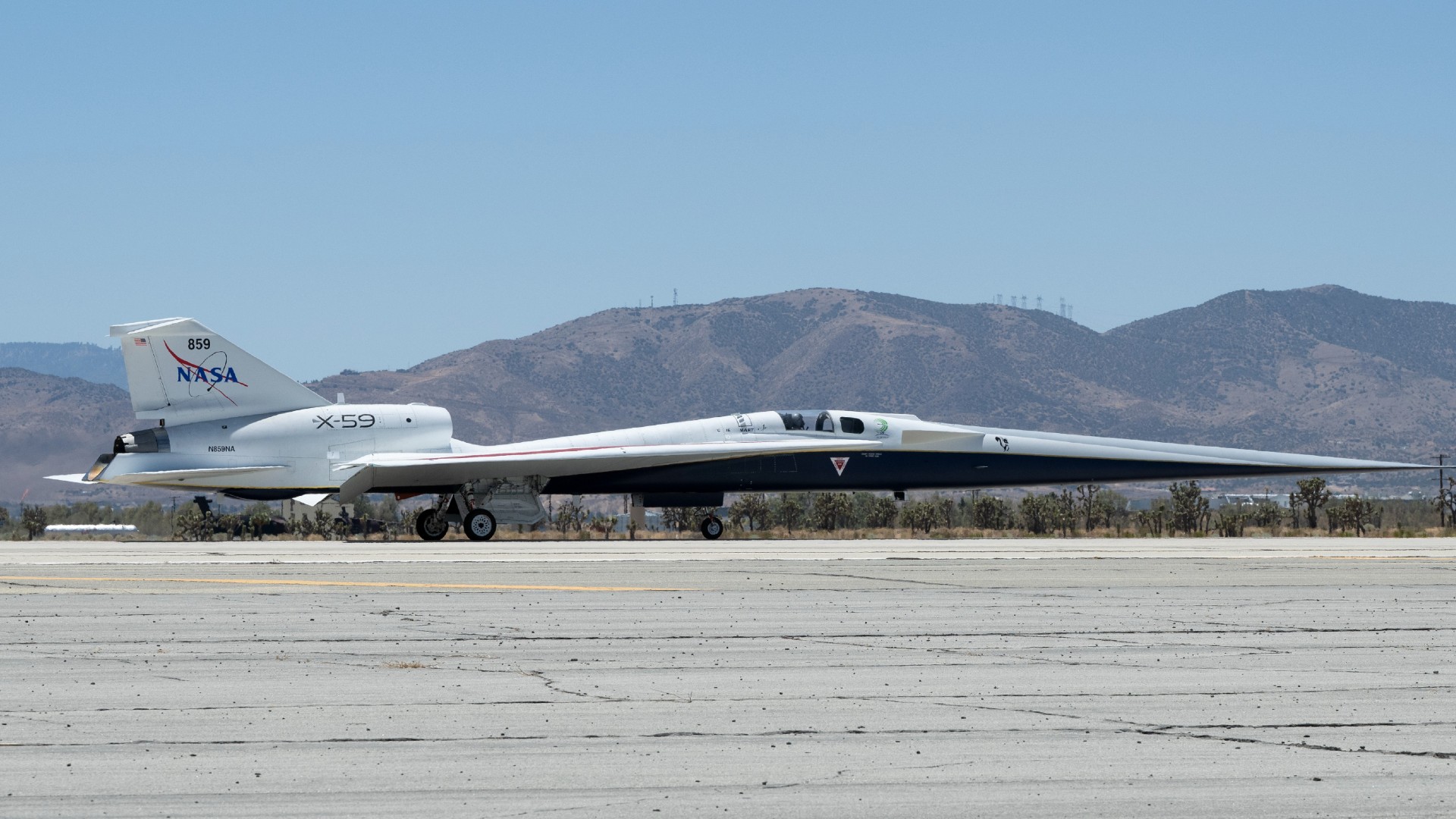
The 81-minute test flight saw the jet climb to 43,400 feet, providing researchers with critical data on how the airframe handles transitions between subsonic and supersonic regimes. While a nearby F-15 chase plane generated its own traditional, thunderous sonic booms, the primary objective remains proving that the X-59’s unique geometry can dampen these shockwaves into a negligible sound for observers on the ground.
NASA teams are now pivoting toward "mission conditions" testing. In the coming days, the X-59 is scheduled to push to Mach 1.4 at an altitude of 55,000 feet. This expansion of the flight envelope is the final hurdle before engineers shift focus to verifying the aircraft’s specialized acoustic profile, a step aimed at eventually overturning long-standing regulations against supersonic overland flight.



Comments (0)
No comments yet. Be the first!