The scale is roughly 100 billion times smaller than an atom. Researchers sifted through the wreckage of high-energy proton collisions at the LHC, which sits along the Swiss-French border, to identify the faint muon signals against a much larger background.
“Physicists have been chasing this decay for more than forty years,” said Marco Santimaria, who co-led the 19-person international analysis team. “Extreme precision is required to pick the muons out of the overwhelming background.”
The result is consistent with theoretical predictions and places limits on possible new particles beyond the Standard Model, according to the researchers. The framework has long served as physics’ rulebook for the microscopic universe, but it does not answer major questions, including the nature of dark matter or how matter survived the Big Bang.
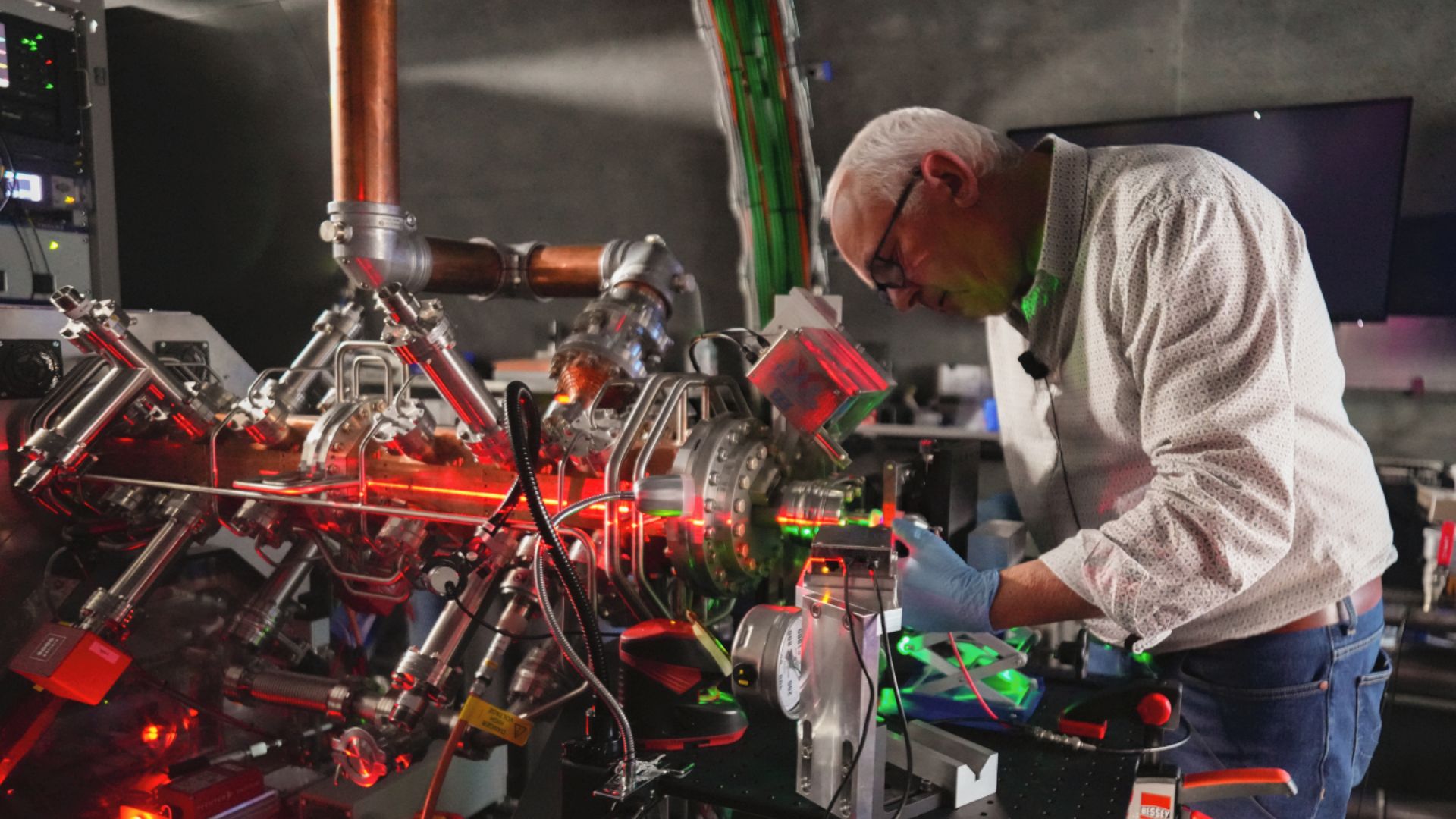
The upgraded LHCb detector was the product of a 15-year design and construction effort involving a 1,900-member international collaboration, said Chris Parkes, head of the Department of Physics and Astronomy at The University of Manchester. The U.K. made the largest national contribution, he said, and helped develop technologies used in the result. Parkes added that plans are under way for an experiment designed to use the next-generation High Luminosity LHC to probe physics at an even smaller scale.




Comments (0)
No comments yet. Be the first!