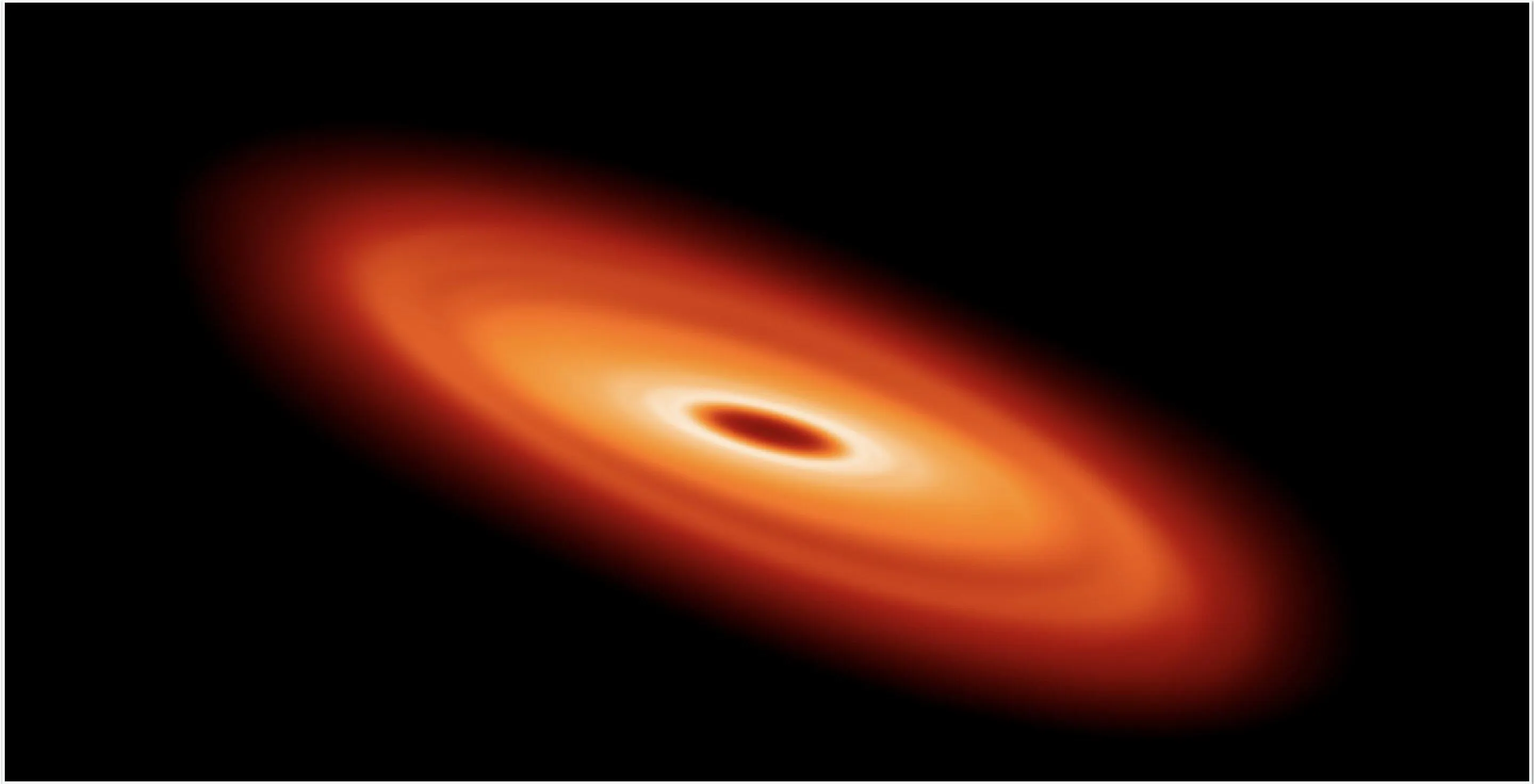
The discovery, led by doctoral candidate Andrea Bernardi of Universidad Diego Portales, utilized archival data from the W. M. Keck Observatory in Hawaii. By employing a coronagraph to mask the intense glare of the host star, researchers successfully pinpointed the planet within a distinct gap in the surrounding debris disk—a telltale sign that the object is carving its own path through the primordial material.
Elias 2-24 b possesses a mass comparable to Jupiter, yet its extreme youth complicates traditional detection methods. Because standard transit techniques rely on a planet passing between its star and Earth, they often fail to spot younger worlds buried in thick, opaque clouds of dust and ice. Co-author Lucas Cieza noted that current formation models struggle to account for this discovery, as previous records of the youngest planets involved objects at least 5 million years old. This find suggests that key processes governing planetary birth are missing from contemporary theories, highlighting a significant blind spot in the observation of galactic evolution.




Comments (0)
No comments yet. Be the first!