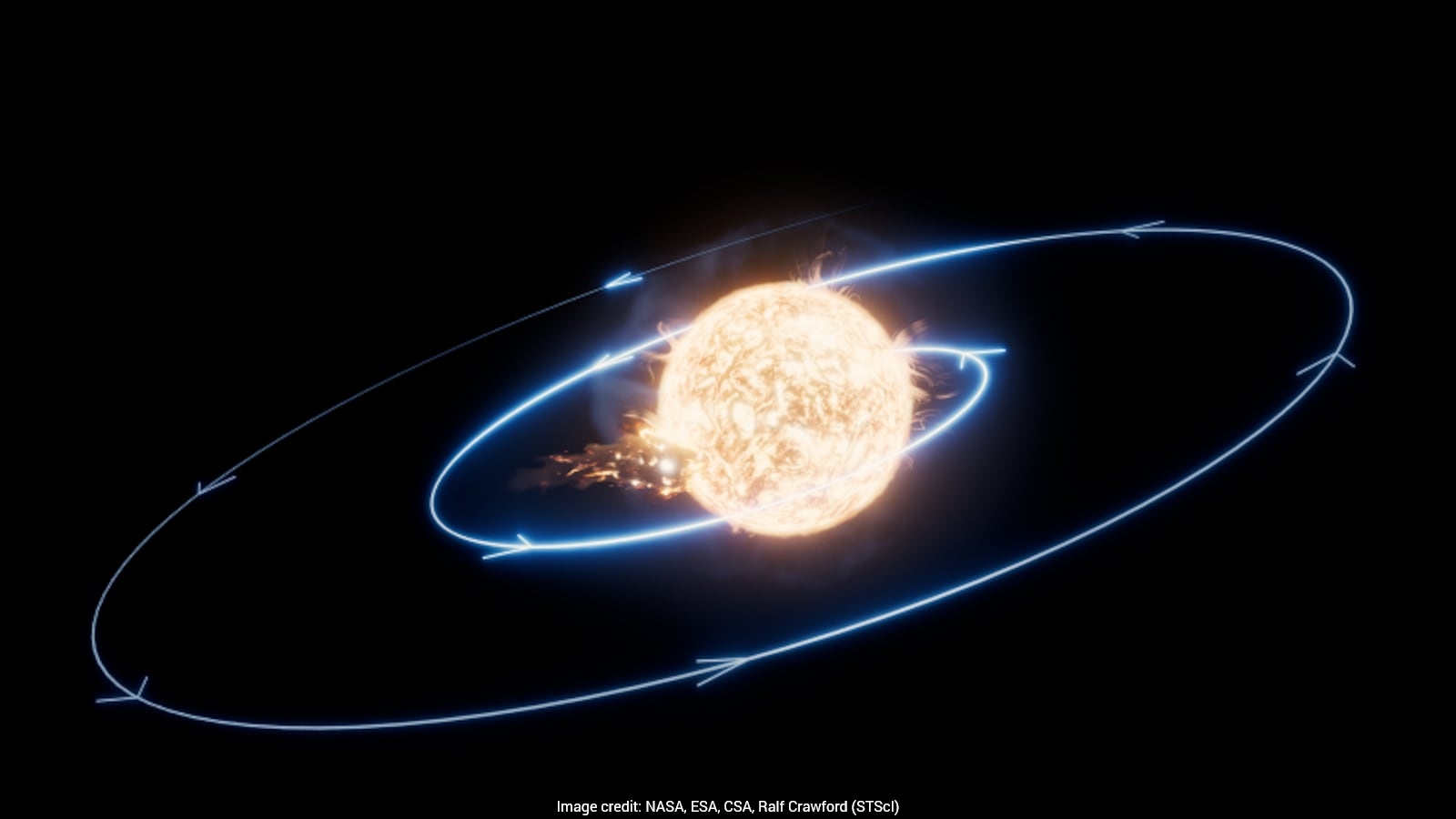
For decades, solar models have struggled to reconcile theoretical predictions with observable reality. Astronomers have been unable to account for the specific depth of the Sun’s churning outer layers or the puzzling deficiency of surface lithium. These discrepancies suggested a gap in our understanding of the Sun’s early developmental history.
A team led by astronomer Mutlu Yildiz at Ege University in Turkey utilized advanced computer simulations to test whether a planetary ingestion could bridge this divide. Their findings, published in the Monthly Notices of the Royal Astronomical Society, indicate that a planet five to ten times the mass of Earth likely spiraled into the young Sun. Such an event would have deposited distinct chemical elements deep within the stellar interior, effectively altering its composition.
This hypothesis provides a cohesive explanation for the Sun’s current state. By modeling the ingestion of a massive, rocky world, the researchers matched their simulations to existing data more accurately than standard solar models. The study implies that planets can leave detectable fingerprints inside their host stars, offering a new method for astronomers to reconstruct the chaotic origins of planetary systems.




Comments (0)
No comments yet. Be the first!