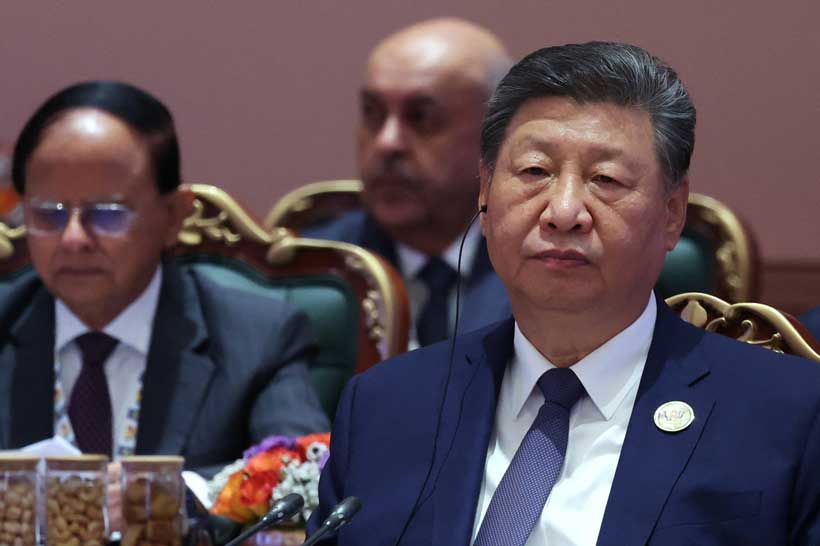
Beijing’s strategy centers on a multi-layered expansion. Through the New Development Bank, China provides infrastructure financing that bypasses traditional Western conditionalities, fostering a dependency that bolsters its own negotiating power. This economic gravity has allowed China to spearhead the expansion of BRICS, incorporating nations like Egypt and Ethiopia to create a voting bloc capable of shielding Chinese interests—ranging from Taiwan to human rights—within United Nations forums.
This influence is increasingly manifesting in hard power. The People’s Liberation Army base in Djibouti serves as a critical node for maritime security, protecting trade routes that are vital to Chinese logistics. Beyond the physical presence, Beijing is embedding itself into the digital and defensive architecture of African states through 5G network installations, government data centers, and the training of local security personnel.
However, this trajectory faces significant friction. Internal resistance within BRICS, led by India and Brazil, complicates efforts to turn the bloc into a formal security alliance against the West. Simultaneously, growing local concerns regarding debt sustainability have sparked debates across Africa about the long-term cost of Chinese financing. While Beijing remains the continent’s primary trading partner, the transition from economic benefactor to security guarantor remains a complex, contested process.



Comments (0)
No comments yet. Be the first!