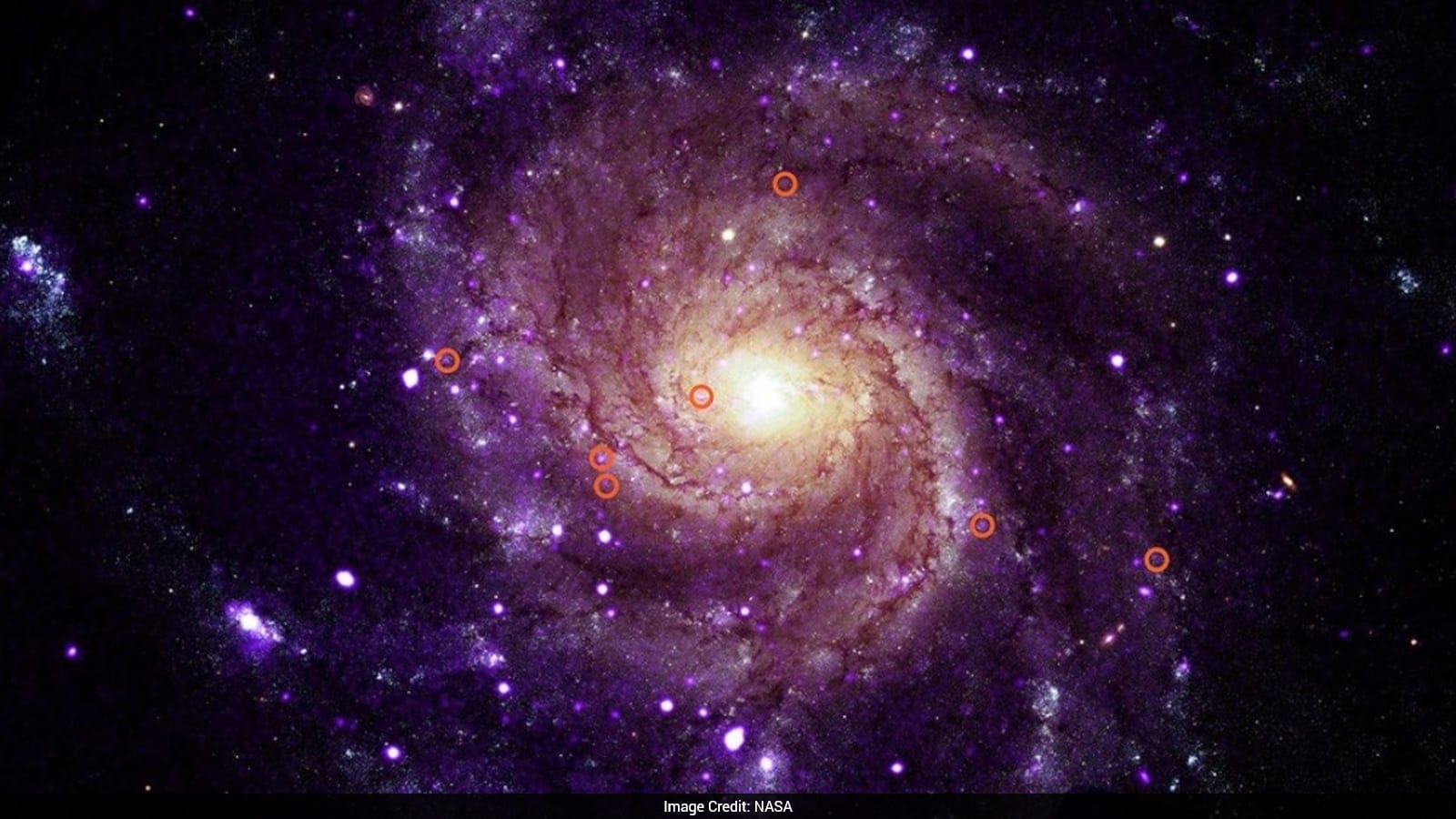
The discovery, detailed in Nature Astronomy, spans six distinct galaxies, including the Andromeda and Pinwheel spirals. These objects were identified by their peculiar behavior: they appear clearly in low-energy X-ray imagery while remaining entirely invisible to high-energy sensors. Because low-energy X-rays sit adjacent to energetic ultraviolet light on the electromagnetic spectrum, scientists conclude these systems are likely pumping out massive quantities of ultraviolet radiation.
While the exact nature of these sources remains under investigation, the team suggests they are binary systems. In these configurations, a black hole, neutron star, or white dwarf strips material from a companion star. As this matter spirals inward, it reaches extreme temperatures, generating the observed radiation before falling into the primary object. This finding suggests a vast population of binary systems has been hiding in plain sight, potentially resolving long-standing astrophysical questions regarding how such high-energy environments function across both active star-forming regions and older galactic sectors.




Comments (0)
No comments yet. Be the first!