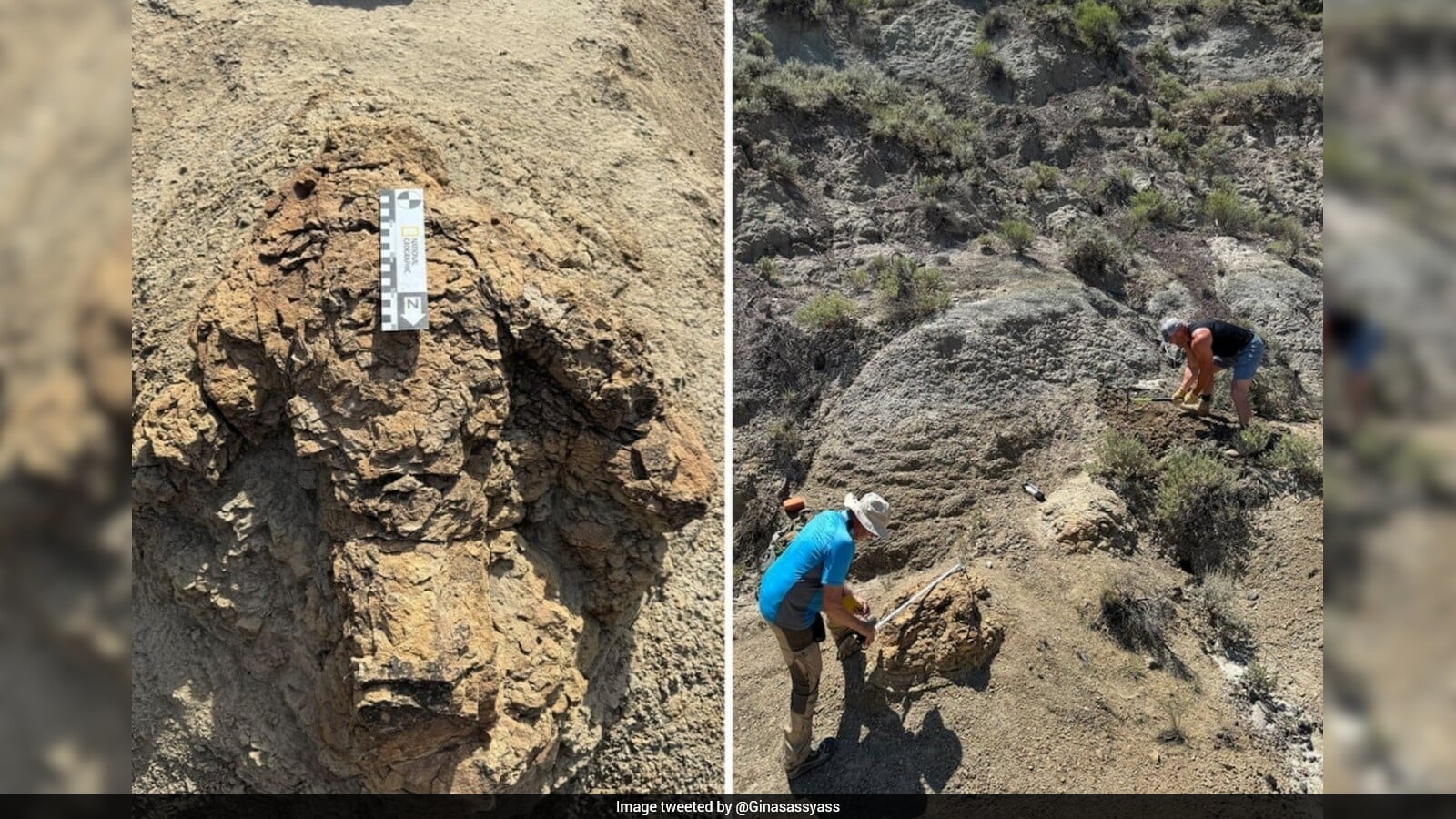
Found on federal land near Marmarth, the tracks stretch across the badlands and reveal a creature moving at a steady pace of 3.5 to 4.5 mph. Each footprint measures approximately 3 feet in length, with a 13-foot gap between strides. Tyler Lyson, curator at the Denver Museum of Nature & Science, noted that while bones provide anatomical data, these prints capture a specific moment of behavior that is seldom preserved for the species.
To document the site, the team employed high-resolution 3D scanning, creating digital replicas that allow for detailed analysis without disturbing the original terrain. Peter Falkingham, the study's lead author, used this data to visualize the tracks in a virtual environment. The findings suggest that the dinosaur was walking rather than running, though researchers acknowledge that erosion has obscured some precision in their speed estimates. The museum plans to extract three of the four prints by helicopter later this year for permanent preservation and further study.




Comments (0)
No comments yet. Be the first!