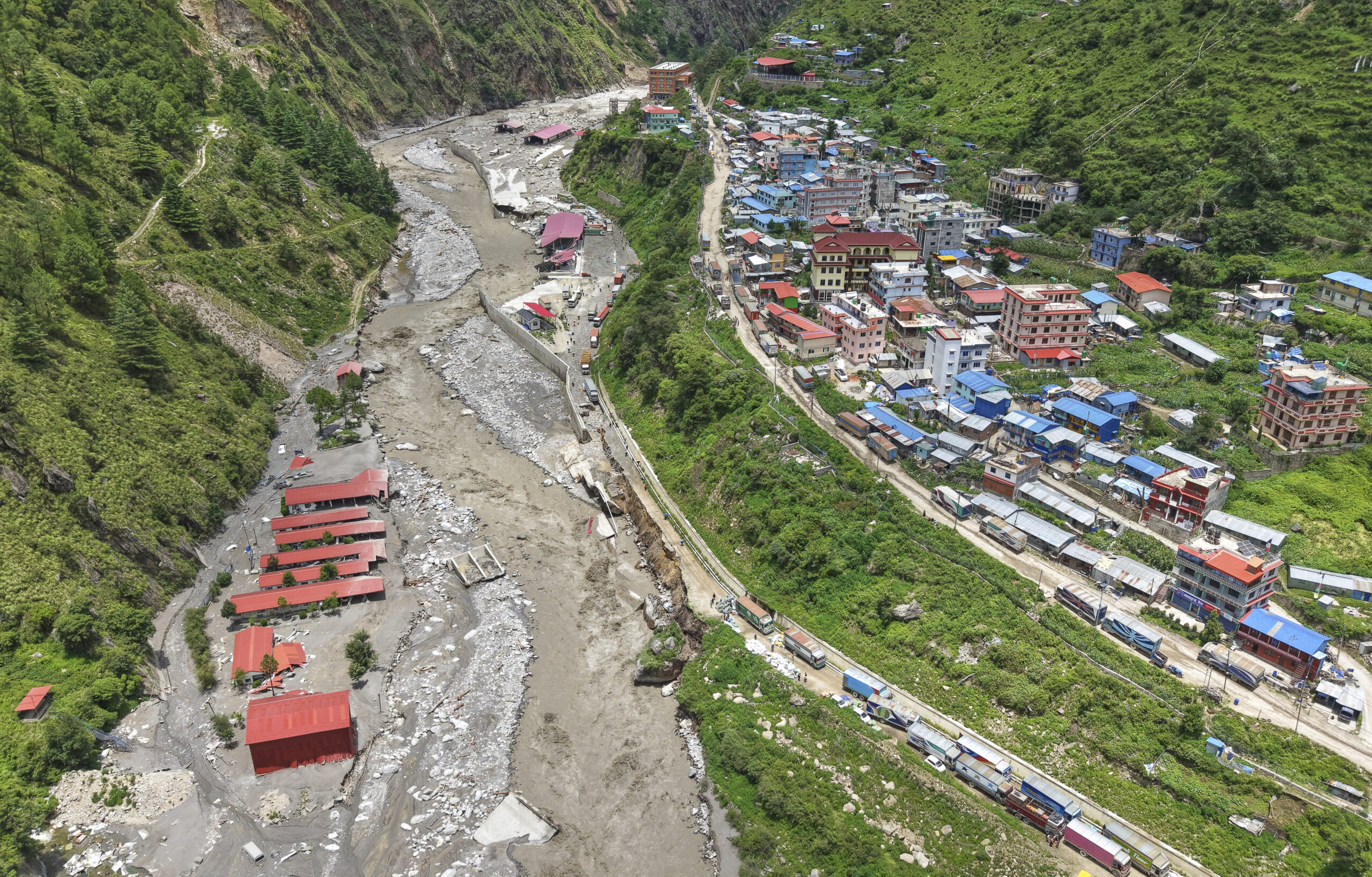
District administrator Narendra Pariyar reported that the sudden flooding swept away residential settlements and energy projects, leaving the extent of casualties in the mountainous region uncertain. Witnesses described a deafening roar preceding the deluge, forcing thousands to flee toward higher ground. The disaster has knocked out 430 megawatts of hydropower capacity—roughly 12% of Nepal’s total output—threatening the nation's energy stability and halting vital trade routes.
Across the border in China’s Shigatse region, the impact is equally severe. A massive mudslide at the Gyirong land crossing has severed communication lines and power grids, prompting President Xi Jinping to order an urgent search-and-rescue mission. This marks the second time in as many years that the Bhote Koshi has unleashed such devastation, echoing a 2023 disaster linked to the catastrophic draining of a Tibetan glacial lake. As the waters remain too turbulent for aerial intervention, the recurring nature of these floods raises urgent questions regarding the resilience of regional infrastructure and the adequacy of current early-warning systems in the face of shifting Himalayan climate patterns.



Comments (0)
No comments yet. Be the first!