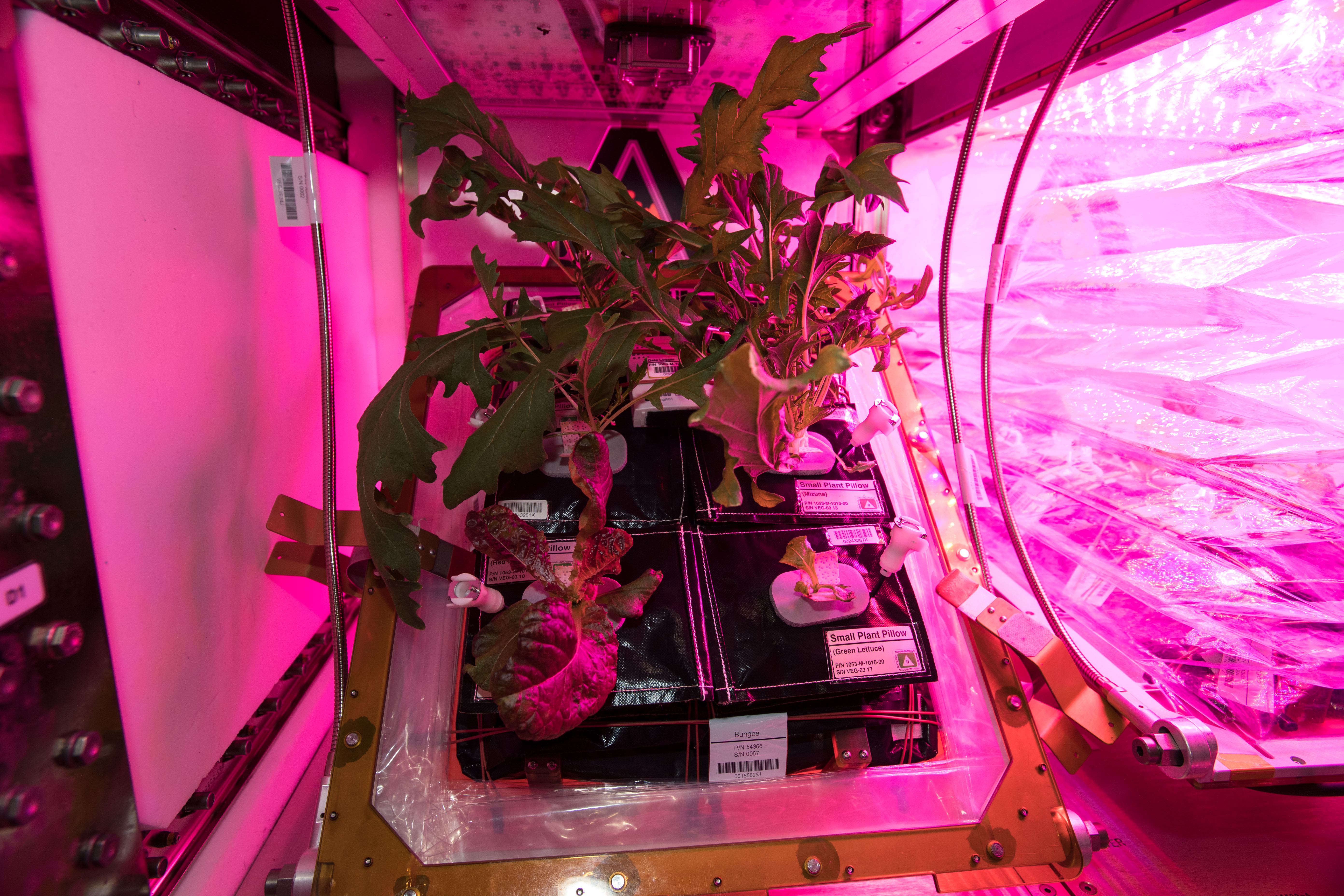
The Veggie chamber serves as a vital testbed for botanical research during Expedition 74, specifically hosting the Veg-06 experiment. This project focuses on two critical biological processes: how alfalfa plants utilize beneficial bacteria to fix nitrogen in space and how lignin—the structural component that allows plants to stand upright—adapts to life outside Earth's gravity. The crew successfully harvested the alfalfa, preserving both roots and aerial parts for return to Earth via the CRS SpX-34 Dragon cargo mission.
Beyond the scientific data, Adenot highlights the psychological value of the garden. Caring for plants provides a tangible connection to life on Earth, offering a sensory reminder of nature through the sight and scent of growing greenery. As space agencies look toward long-duration exploration, the ability to cultivate fresh food is viewed as essential for both nutritional stability and crew morale. Adenot notes that the knowledge gained from these experiments could also yield practical benefits for Earth-based agriculture and forestry, particularly regarding soil quality and structural plant science.



Comments (0)
No comments yet. Be the first!