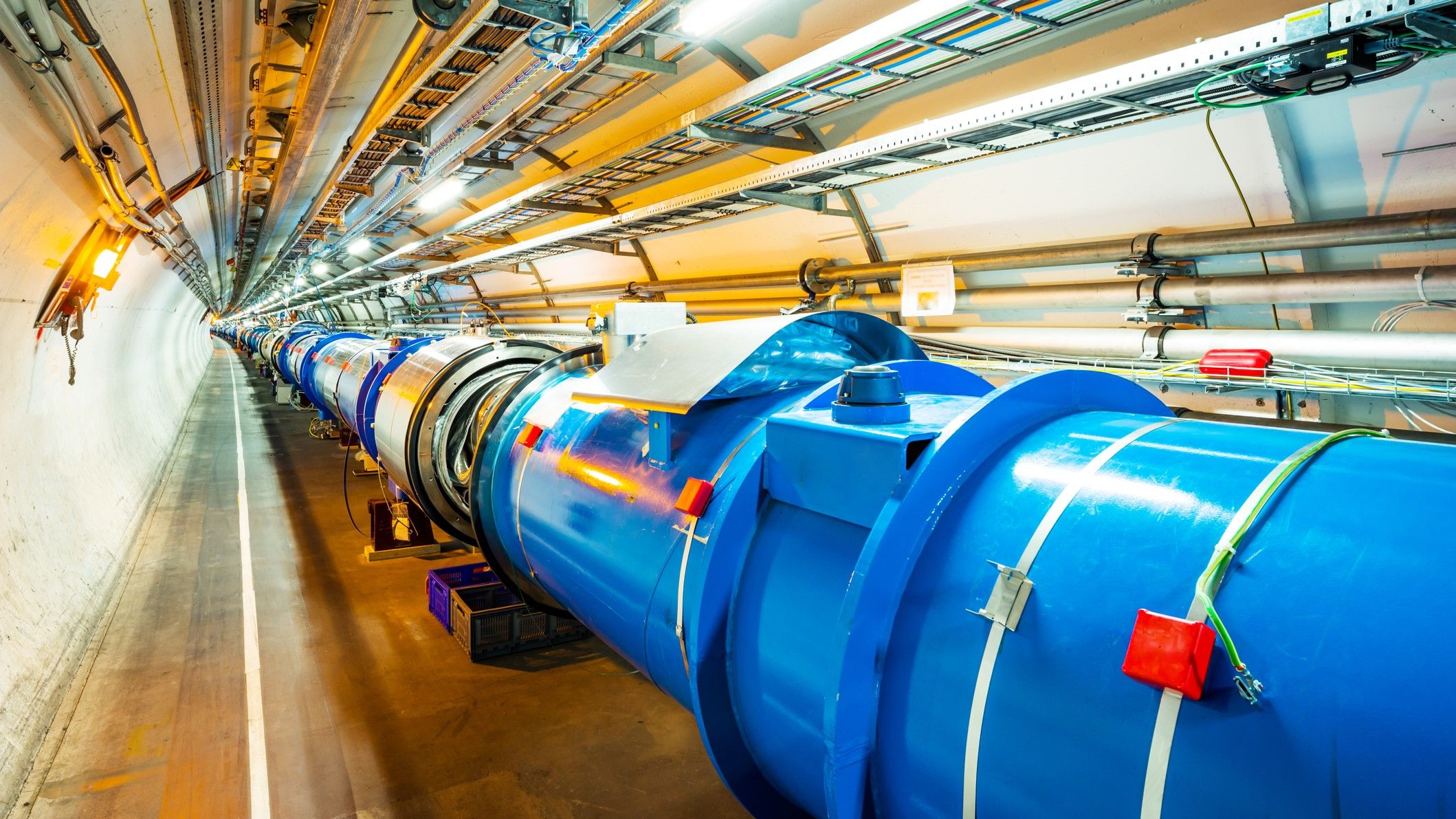
Buried beneath the Jura Mountains on the Franco-Swiss border, the 27-kilometer circular tunnel of the Large Hadron Collider has long served as the crucible of modern physics. Having powered the landmark discovery of the Higgs Boson—a particle named in honor of Satyendra Nath Bose—the facility is now pivoting toward deeper mysteries. The upcoming upgrades are designed to increase collision frequency, allowing researchers to probe conditions mirroring the earliest moments of the universe.
India’s involvement has evolved significantly since the 1960s, moving from observation to deep industrial and scientific integration. Today, Indian laboratories contribute essential superconducting magnets, cryogenics, and beam instrumentation. Prof. Tapan Nayak and Dr. Archana Sharma, both central figures in the Indian contingent at CERN, emphasize that the nation’s role extends beyond hardware. Indian scientists are currently leading complex data analyses and detector development, positioning the country as a primary stakeholder in the search for the invisible substance known as dark matter.
This partnership is also marked by a distinct cultural footprint. A two-meter bronze statue of Nataraja, the cosmic dancer, stands at the facility as a symbol of the intersection between ancient philosophical inquiry and modern scientific rigor. As the collider prepares for its 2030 restart, the collaboration aims to resolve the remaining gaps in the Standard Model, with India firmly embedded in the pursuit of the next major discovery.



Comments (0)
No comments yet. Be the first!