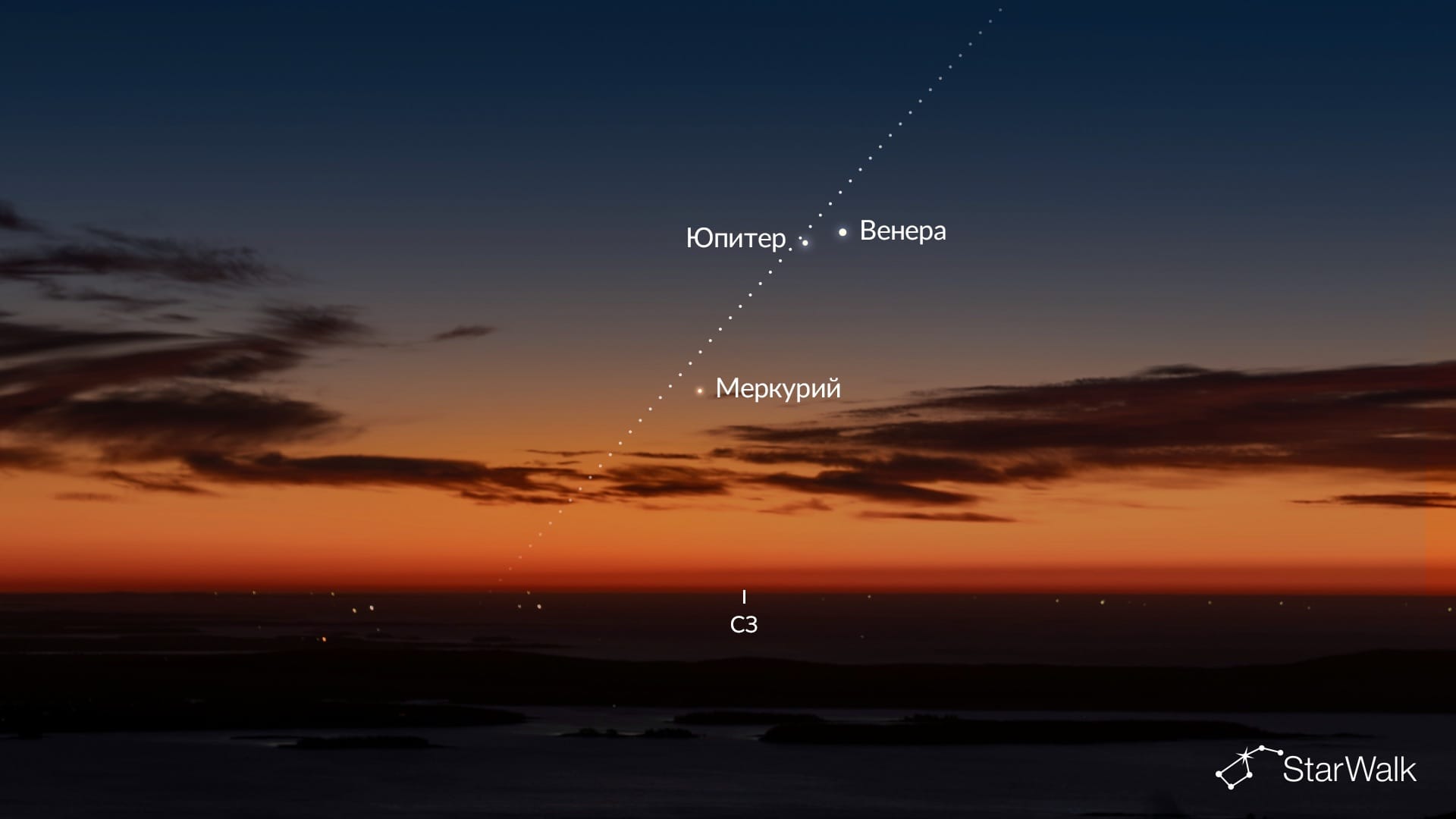
Venus leads the display, acting as the brilliant Evening Star that will be easily visible to the naked eye. Jupiter sits in close proximity, while Mercury lingers lower toward the horizon, demanding sharper focus against the lingering twilight. While the alignment reaches its peak intensity on June 12, the three bodies will remain in view through June 15.
NASA notes that this phenomenon occurs because the planets orbit the Sun along nearly identical paths. By June 17, the configuration shifts as a thin crescent Moon joins the scene to form transient triangular patterns. Observers should seek out locations with minimal light pollution and a clear, unobstructed western view to maximize their chances of spotting the fainter Mercury before its visibility wanes later this month.




Comments (0)
No comments yet. Be the first!