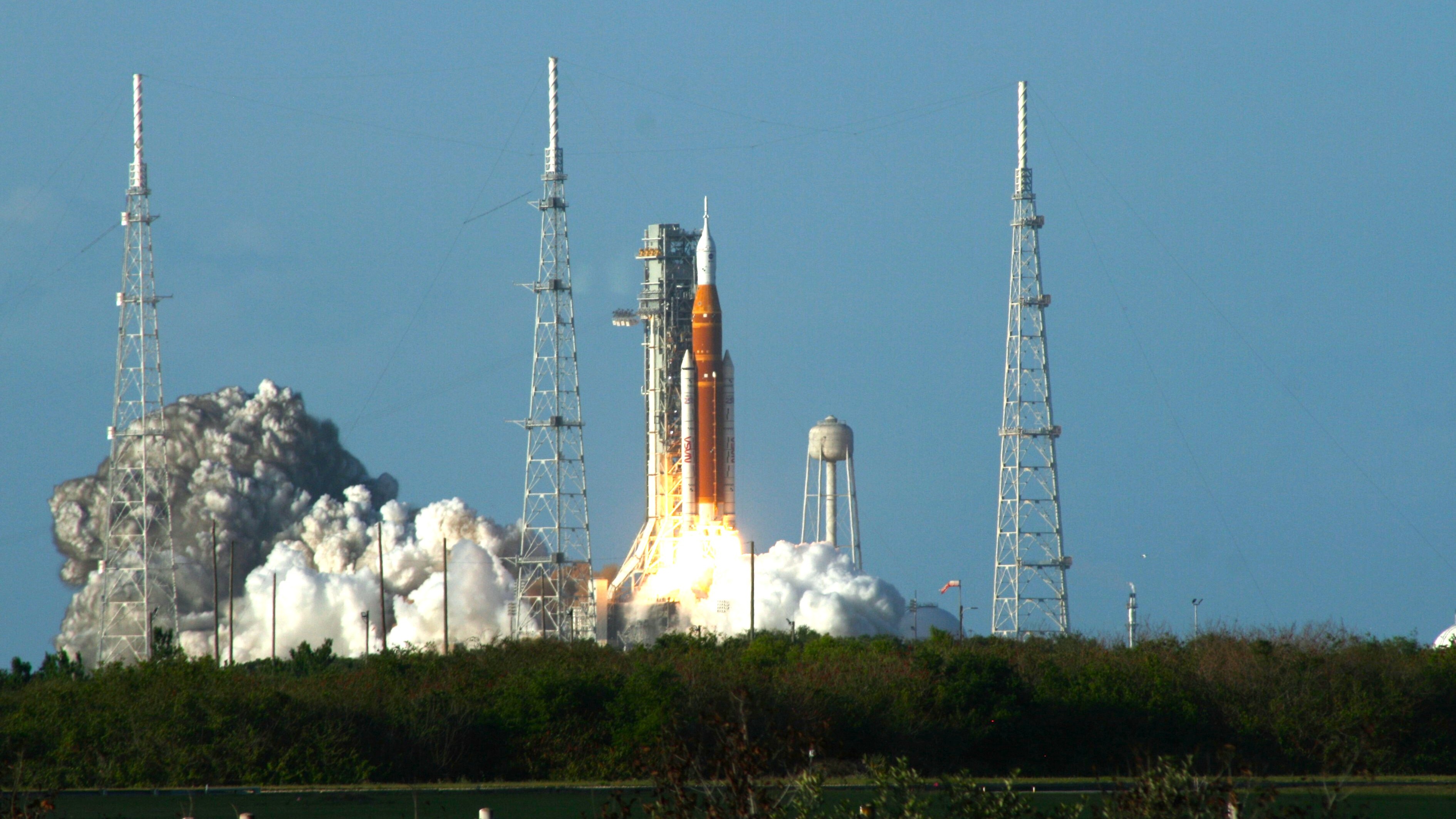
Published in the journal Geophysical Research, the study traced the first disturbance to the April 1, 2026, launch from Kennedy Space Center. A second followed the Apogee Raise Burn about two hours later, and a third came after the trans-lunar injection burn, roughly 25 hours after liftoff. Researchers described the later disturbances as large-scale, though weaker than the second event.
The disturbances extended about 50 degrees of longitude across North America, spanning the continent from east to west over roughly 5,000 kilometers (3,100 miles). “This is the first time a single space mission produced three instances of ionospheric disturbances over the same region during successive orbit maneuvers,” the study stated.
The ionosphere is part of the upper atmosphere through which GPS signals travel. Changes there can affect signal speed and, in turn, positioning accuracy. Study co-author Charles Lin told Space.com the effects “could have a strong impact not only on self-driving cars but also on drone positioning.” The researchers did not report a widespread GPS outage caused by the mission.
Artemis II carried Reid Wiseman, Victor Glover, Christina Koch and Jeremy Hansen on the first crewed mission to the Moon in more than five decades. NASA said the crew traveled farther from Earth than any humans before, surpassing Apollo 13’s 1970 record of 248,655 miles, and captured images of the Moon’s far side. The flight tested the SLS rocket and Orion capsule as part of the Artemis programme, which aims to enable a lunar landing by 2028.



Comments (0)
No comments yet. Be the first!