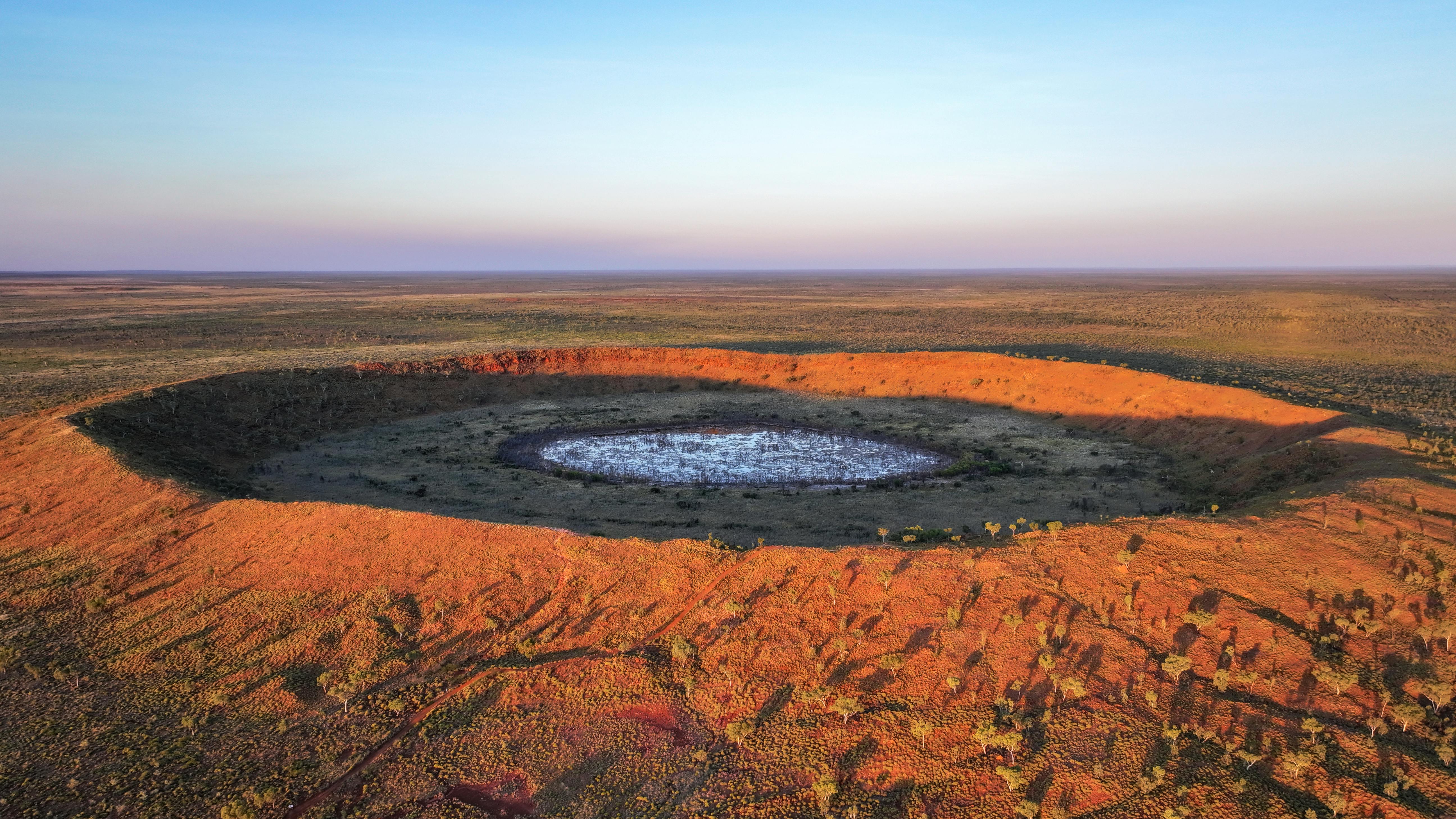
The site features a central uplift—a geological rebound effect triggered by the immense kinetic energy of an impact. Over hundreds of millions of years, selective erosion carved away surrounding layers of rock, leaving only the resilient sandstone ridges that radiate from the center like legs. This peculiar structure spans roughly 4 kilometers in its core, anchoring the larger oval-shaped impact basin.
For years, the origin of the site was a subject of intense debate, with some researchers initially proposing volcanic activity as the cause. The discovery of shatter cones—fan-shaped fractures created by high-pressure shock waves—eventually confirmed its extraterrestrial roots. Laboratory analysis of shocked quartz and zircon crystals found within the sandstone now serves as the primary method for investigating the impact's dynamics, including the trajectory of the meteorite. While the precise date of the event stays elusive, the crater continues to provide geologists with a rare window into the forces that reshape the planet's crust.




Comments (0)
No comments yet. Be the first!