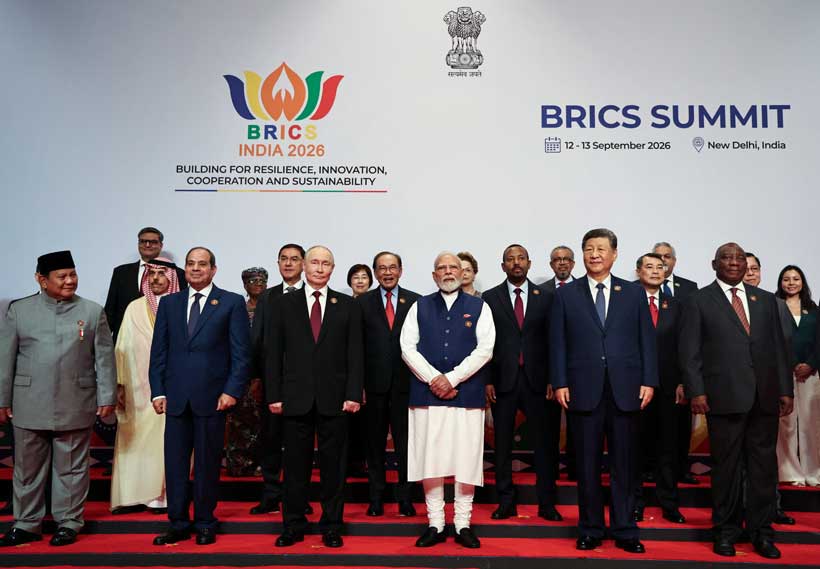
India enters this summit with a dual identity: a leading voice for the Global South and a pragmatic partner across competing power centers. While its GDP growth and expanding digital infrastructure provide significant economic weight, the current volatility in West Asia demands a shift in strategy. With nearly ten million Indians residing in the Gulf and 15% of India’s trade flowing through the region, instability in the Middle East represents a direct threat to domestic security and energy supplies.
Rather than assuming the role of a traditional security guarantor, New Delhi is uniquely positioned to act as a convener. By proposing a BRICS-West Asia Contact and Mediation Mechanism, India could establish permanent channels for crisis communication, maritime security, and humanitarian coordination. This approach relies on India's ability to maintain relationships with diverse actors, from the Gulf states and Israel to Iran and Russia. Success, however, depends on moving beyond simple declarations. To translate its presidency into lasting influence, India must bolster its economic footprint—addressing its significant trade deficit with BRICS partners—and prioritize institutional performance over geopolitical posturing. The ultimate gauge of Indian leadership will not be its prominence in diplomatic circles, but its capacity to set the agenda and foster cooperation in an increasingly fragmented international order.


Comments (0)
No comments yet. Be the first!