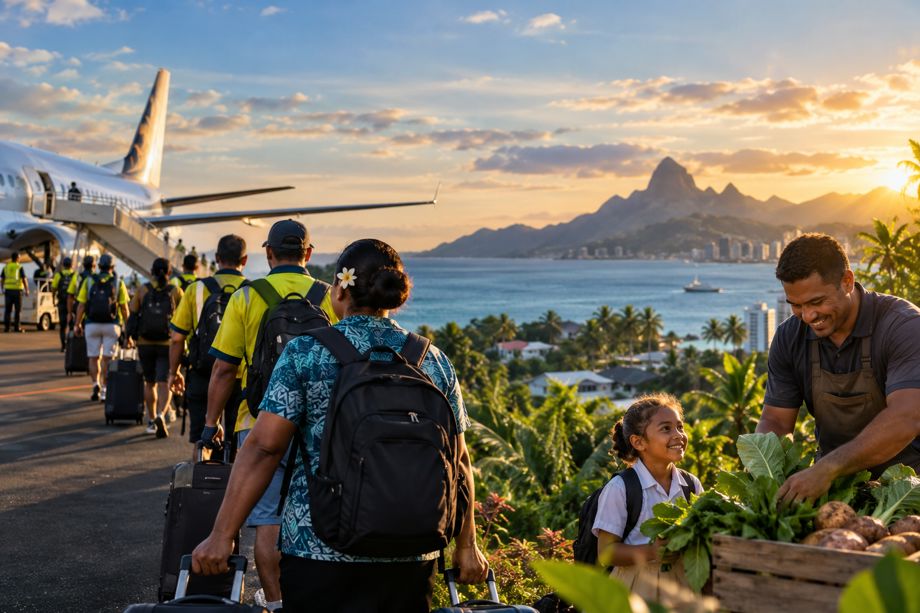
Pacific economies face a unique demographic reality, with over 80% of emigrants falling into the working-age bracket. Schemes like Australia’s Seasonal Worker Programme and New Zealand’s Recognised Seasonal Employer scheme have facilitated the movement of more than 88,000 workers, providing a critical outlet for countries like Vanuatu and Kiribati, where youth unemployment rates often hit double digits. IMF simulations indicate that these arrangements can yield GDP gains of up to 3% by converting otherwise underused labor into steady household income.
However, the reliance on overseas earnings creates a developmental paradox. Current data shows that over 90% of households prioritize immediate consumption, with less than 2% of remittance capital directed toward small business ventures. A more concerning trend involves human capital: participation in mobility programs is linked to a three-percentage-point decline in school enrollment for migrants' children. Without intervention, this loss could shrink the skilled workforce by up to 6% in some nations over the next two decades.
To capture lasting value, policymakers must integrate labor mobility with robust social and financial infrastructure. This includes incentivizing digital savings, enhancing financial literacy, and implementing targeted school support for families with parents working abroad. By shifting the focus from mere employment to the systematic development of skills and business capital, Pacific governments can ensure that the current wave of migration builds a foundation for domestic prosperity rather than simply offsetting the lack of local opportunity.



Comments (0)
No comments yet. Be the first!