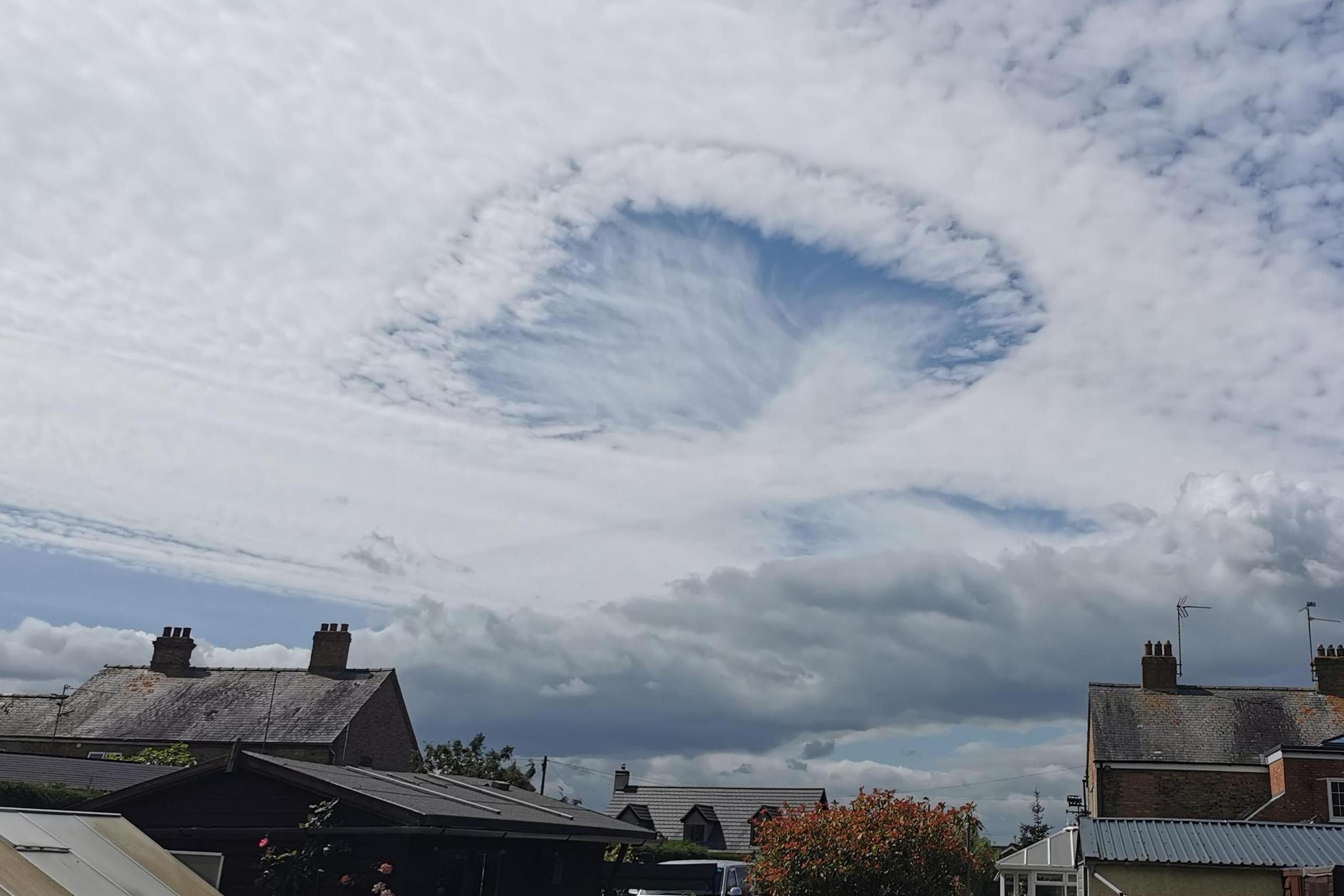
The images, acquired by the Moderate Resolution Imaging Spectroradiometer, display elliptical voids featuring feathery ice trails at their centers. These cavum clouds occur when planes penetrate mid-level altocumulus banks. As air flows over the wings and propellers, adiabatic expansion causes supercooled water droplets to freeze instantly into ice crystals. These crystals grow heavy and descend, leaving behind the distinct, clean-cut holes visible from space.
Research led by the University Corporation for Atmospheric Research identifies the mechanism behind the visual effect. When aircraft fly through cloud layers at sharp angles, they produce circular cavum clouds; shallower trajectories result in elongated canal clouds. The wispy trails observed in the center of these gaps, known as virga, consist of precipitation that evaporates before reaching the surface. From large passenger jets to private turboprops, any aircraft passing through these specific atmospheric conditions can trigger the reaction.



Comments (0)
No comments yet. Be the first!