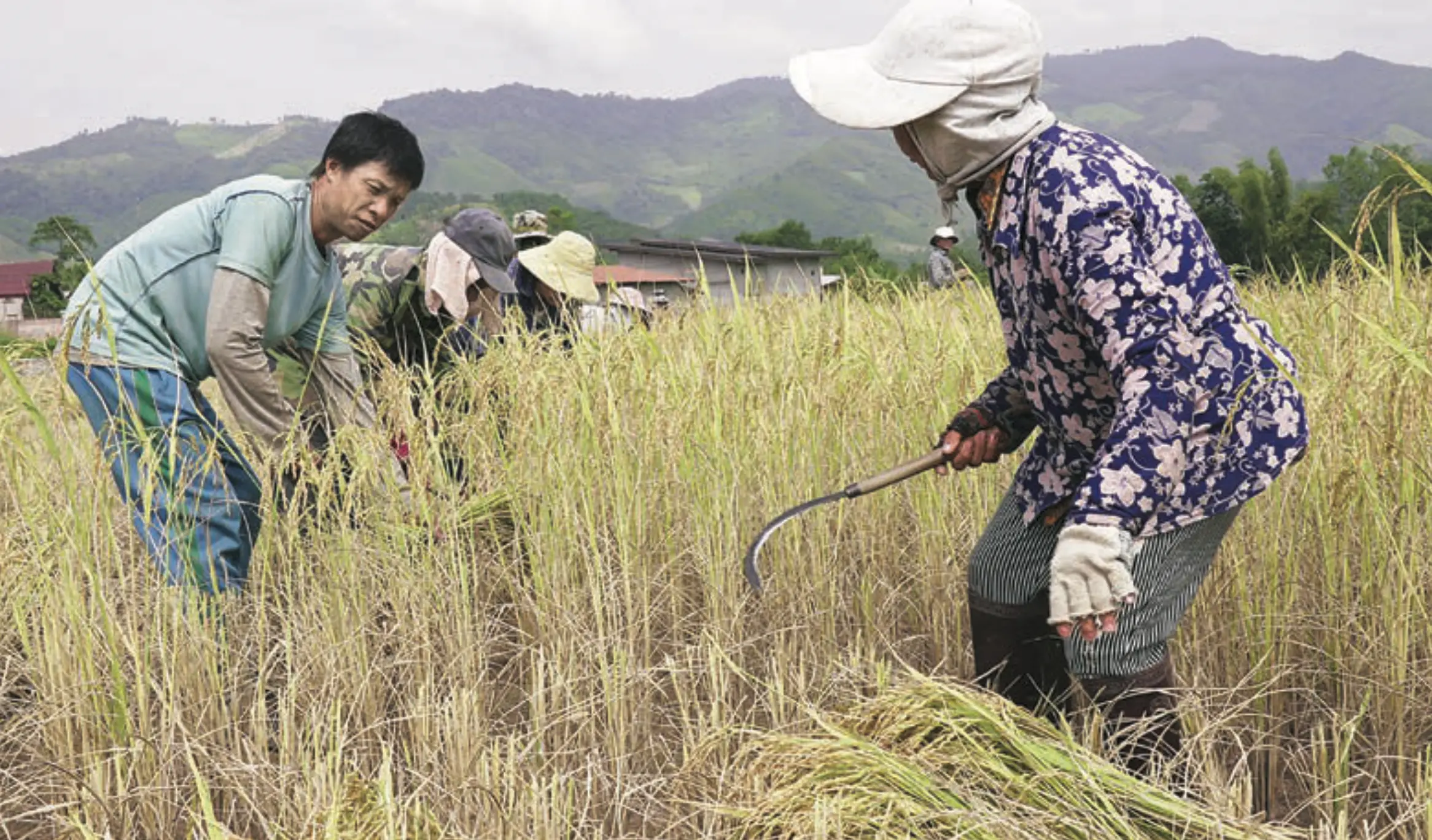
The National Agriculture and Forestry Research Institute, in partnership with the Joint FAO/IAEA Centre, developed two primary varieties to stabilize food security. The Saphart 1 strain matures 20 days faster than conventional types and boosts yields by 20%, allowing growers to harvest before seasonal severe weather strikes. Meanwhile, the Houykhod 2 variety provides resistance to blast disease and offers specific grain qualities that allow farmers to tap into the market for processed goods like rice noodles.
Success hinges on a collaborative model where researchers and farmers work in tandem. In the Wapi district, 19 villagers produced 9.5 tonnes of Saphart 1 seeds in 2026, facilitating rapid adoption across Salavanh province. Today, over 300 farmers cultivate this variety across 350 hectares, with plans to expand further. Community seed-production groups—frequently led by women—have become essential to this distribution network, ensuring that scientific advancements translate into tangible improvements for rural livelihoods and national production targets.




Comments (0)
No comments yet. Be the first!