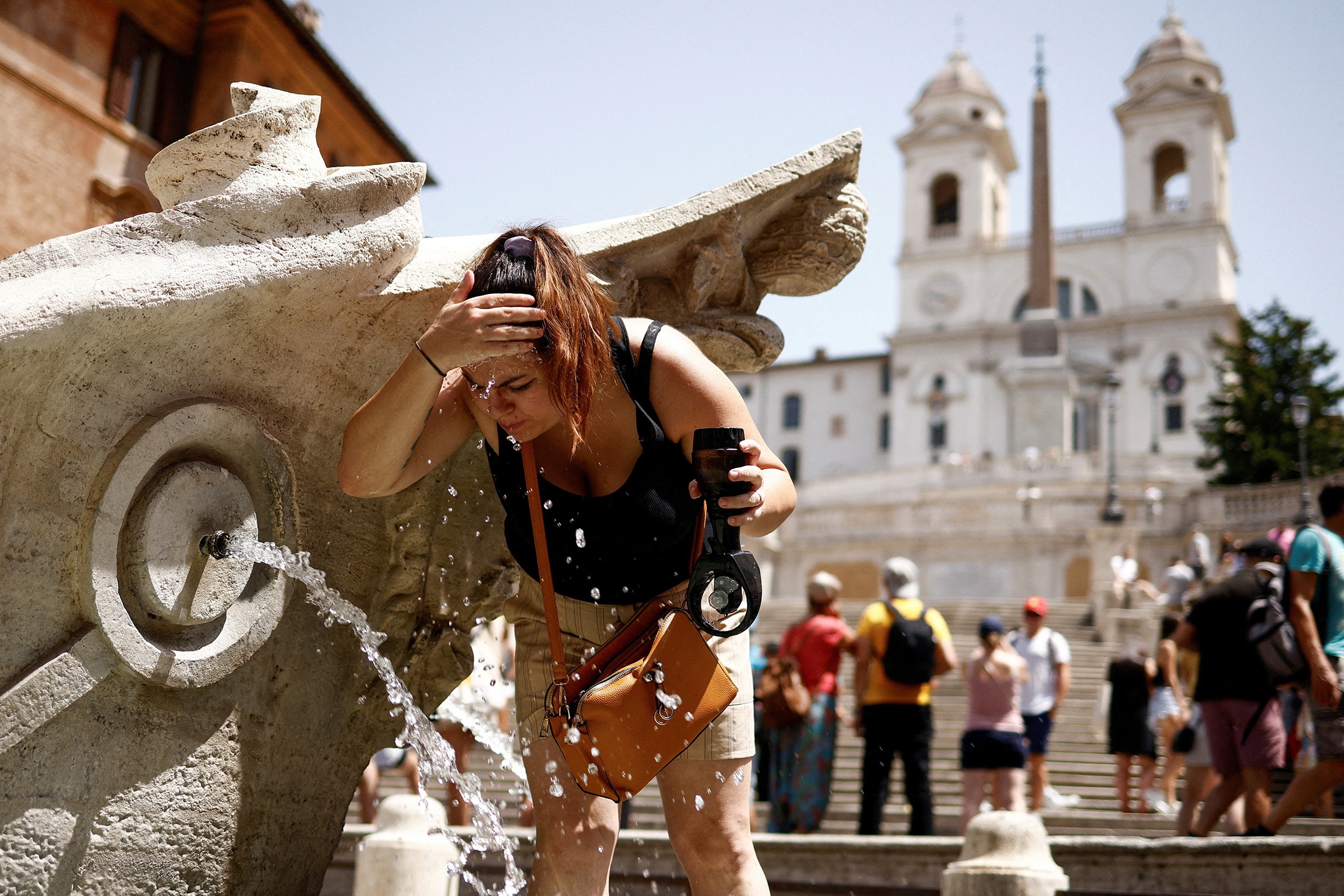
Italy’s Health Ministry has elevated its emergency status to red for every major city, from Sicily to the Alps. The warning acknowledges that heat levels now pose a threat to the general population, prompting local authorities to open public buildings as cooling centers. Meanwhile, the Piedmont region has declared a formal state of emergency as river levels hit historic lows, compounding the risk of wildfires.
Energy security has become a focal point of the crisis. In Hungary, officials have cut decorative lighting at state landmarks to conserve electricity, as low Danube levels force the Paks nuclear power plant to throttle operations. Romania is taking more drastic measures, attempting to redirect the Danube’s flow using rock-filled barges to ensure its Cernavoda reactor remains cooled.
Logistics across the continent are suffering as Germany’s Rhine River falls to depths that restrict cargo capacity. Vessels are sailing partially loaded, driving up freight costs for essential commodities like coal and grain. While some find respite in natural refuges like Bosnia’s Vjetrenica Cave, the broader reality remains grim. Scientists confirm Europe is the world’s fastest-warming continent, turning these seasonal extremes into systemic risks that challenge the stability of power grids, transport networks, and national economies.



Comments (0)
No comments yet. Be the first!