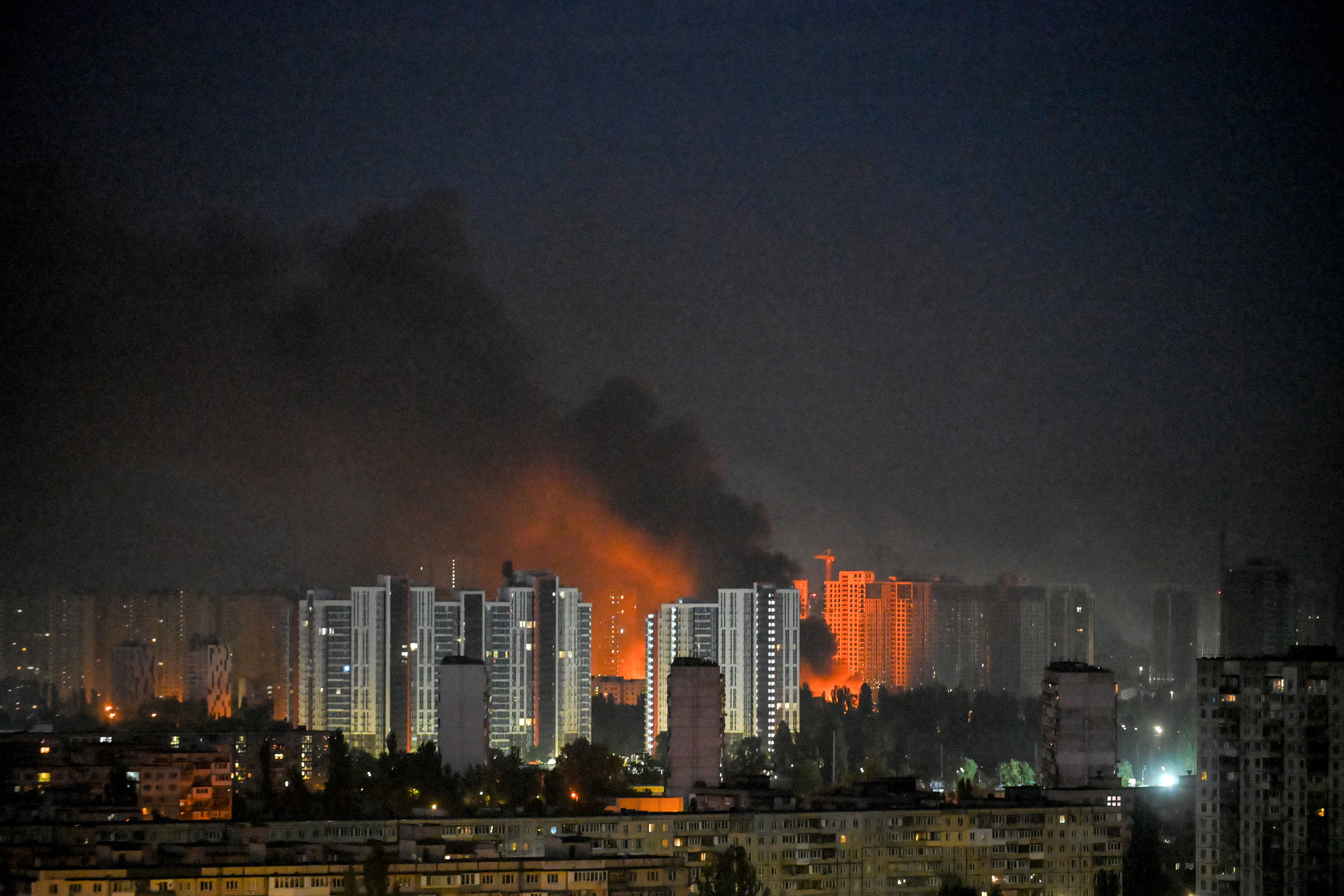
Emergency responders are currently navigating collapsed warehouses and industrial sites to locate survivors after the massive barrage. Beyond the immediate casualties, the attack triggered hazardous chemical leaks, including ammonia, which complicated rescue efforts throughout the night. While Ukrainian forces suppressed 98 incoming drones, the failure to intercept a single ballistic or hypersonic missile exposes a critical vulnerability in the capital's protective umbrella.
This gap in defensive coverage has reignited urgent calls from Kyiv for additional PAC-3 Patriot interceptor batteries. The current reliance on these systems remains high, yet the long-term supply chain is shrouded in uncertainty due to shifting political support in Washington. The conflict is increasingly defined by a race between Russia’s ability to manufacture advanced weaponry and Ukraine’s capacity to secure the interceptors necessary to neutralize them.
In a parallel move, Kyiv intensified its own campaign against Russian logistics, including a strike on a facility tied to the retailer Wildberries. By targeting supply chains deep within Russian territory, Ukrainian commanders are attempting to disrupt the very logistics hubs that sustain Moscow’s offensive capabilities. As both sides prioritize the destruction of industrial and supply infrastructure, the war has transitioned into a grueling contest of endurance where manufacturing output and replenishment rates determine the pace of the front lines.



Comments (0)
No comments yet. Be the first!