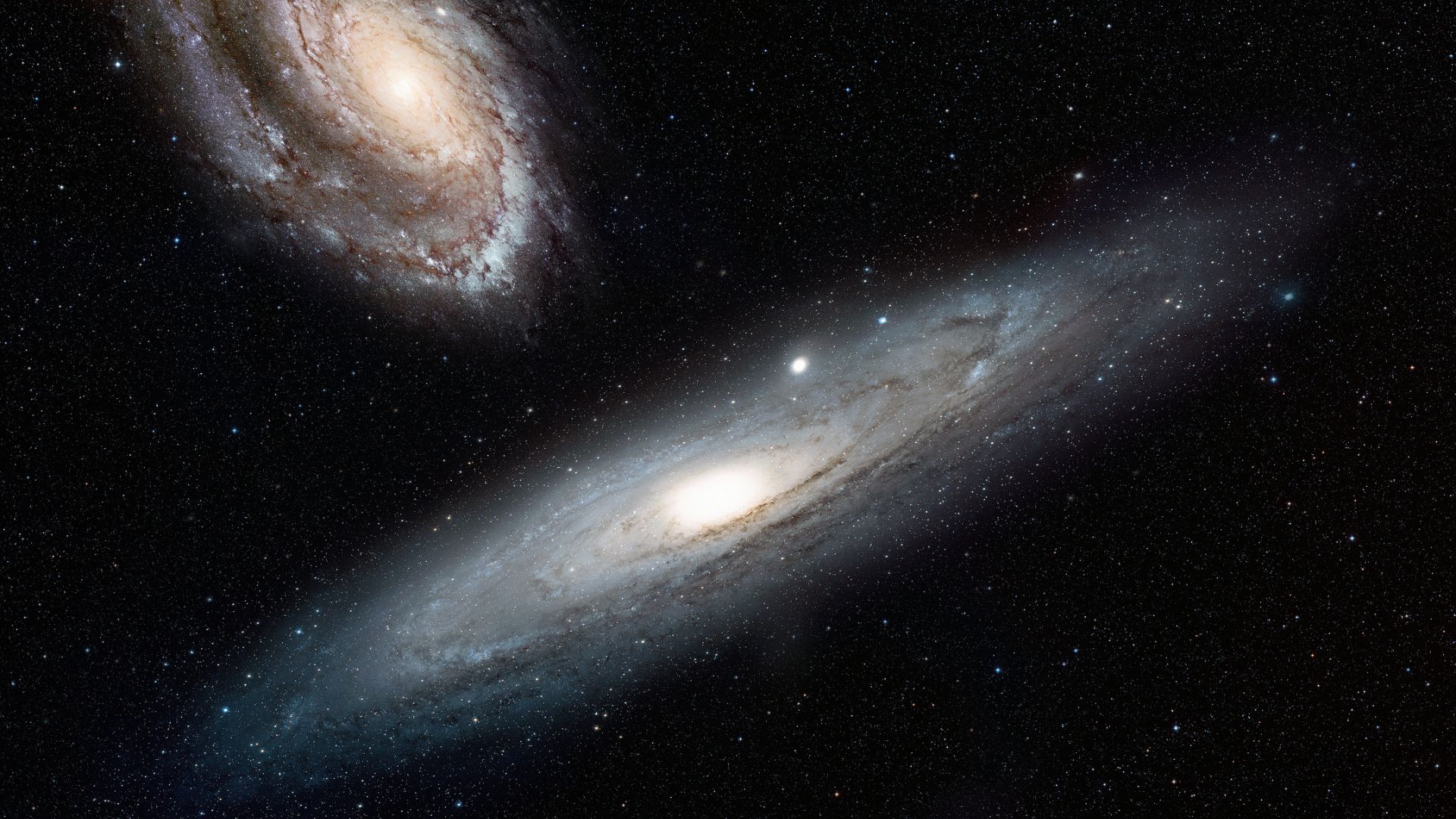
By analyzing approximately 200 million individual stars across two-thirds of Andromeda’s disk, astronomers have reconstructed the galaxy’s history with unprecedented resolution. The findings, published in The Astrophysical Journal, indicate that the current slowdown is not a result of fuel exhaustion. Unlike a dying fire starved of wood, Andromeda retains the gas and dust necessary for star creation. Instead, lead author Tobin Wainer of the University of Washington describes the phenomenon as a natural recovery period, likening the current state to a runner taking a breather after a marathon.
The data reveals a clear trajectory: 500 million years ago, the galaxy generated stars at a rate of one solar mass per year. That figure has since withered to just one-fifth of that mass. This decline is largely centered within a ring located 32,000 light-years from the galactic core, where activity has significantly tapered. This recent quietude stands in stark contrast to a massive burst of star formation that occurred two billion years ago, likely triggered by a violent merger or interaction with another galaxy.
Researchers also investigated the influence of the satellite galaxy M32. Observations show that the region of Andromeda closest to this companion began experiencing a decline roughly 60 million years ago, suggesting local gravitational interactions may play a role in the broader cooling trend. Ben Williams, a co-author from the University of Washington, emphasized that studying individual stars is essential, as they serve as a fossil record of the galaxy's development—a task only possible through Hubble’s unique ability to capture high-resolution detail across such a vast celestial expanse.



Comments (0)
No comments yet. Be the first!