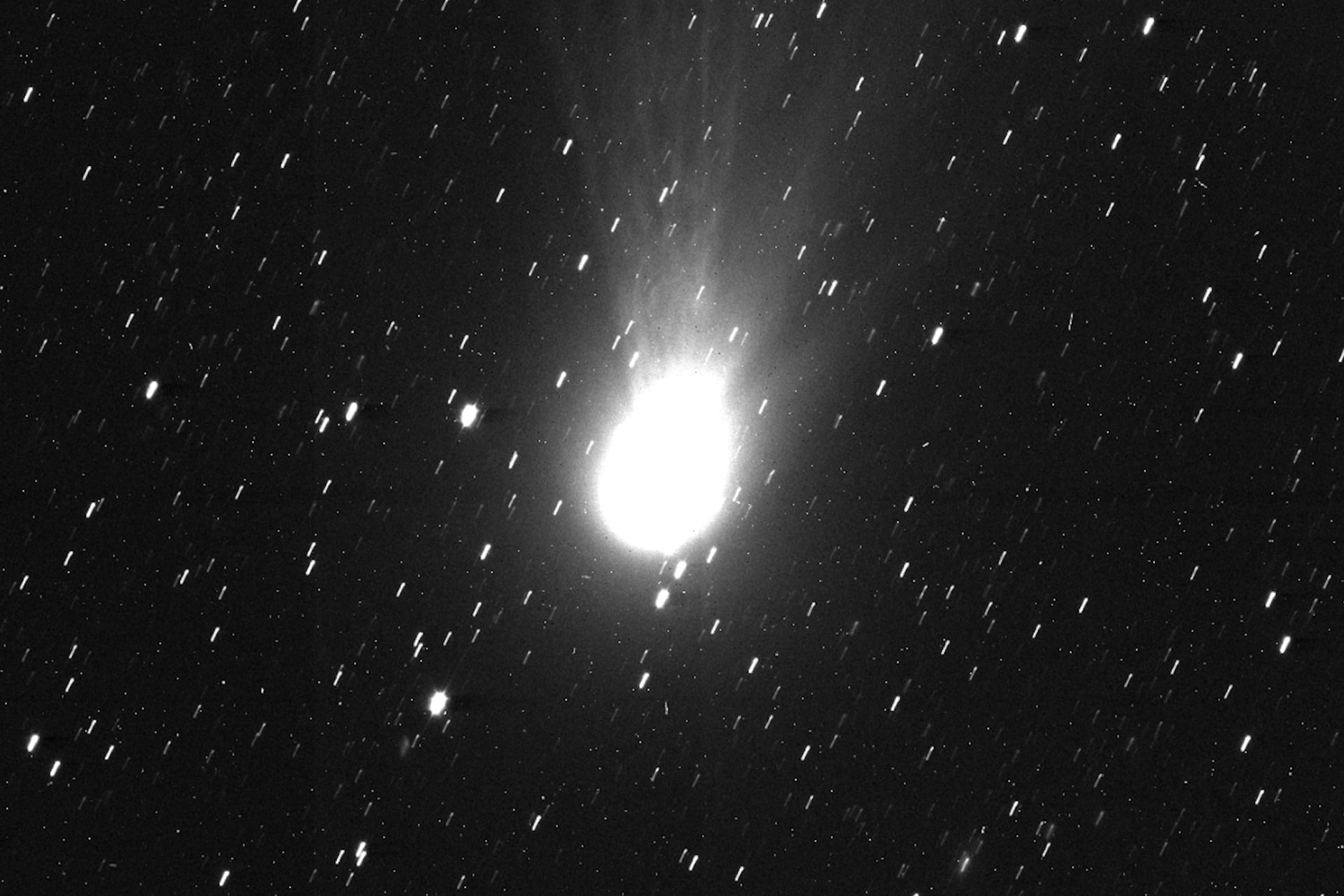
The discovery began when the object veered off its predicted course during a close approach to Earth on August 28, 2025. While planetary radar data from NASA's Deep Space Network initially expected the object to follow a specific trajectory, it failed to appear on schedule. Davide Farnocchia of NASA’s Jet Propulsion Laboratory recognized that the non-gravitational shifts were inconsistent with an asteroid, pointing instead to a subtle thrust caused by outgassing.
To verify this, the team coordinated with observatories in Hawaii and Chile, including the Very Large Telescope. These high-resolution images captured a faint tail, confirming the object was releasing material as solar heat transformed its internal ice into gas. While the object, now redesignated as P/1998 SH2, had been tracked since 1998, its lack of a prominent coma had masked its true nature for years. This finding offers new insight into the class of 'dark comets,' which possess the erratic movement of comets while remaining largely invisible to standard telescopic detection.




Comments (0)
No comments yet. Be the first!